
© Kurt Arrigo / Ocean Image Bank
How Fresh Food for Microbes Stirs Up the Ocean Floor
U Bremen Excellence Chair Jack Middelburg investigates the climate-relevant carbon cycle in the ocean
The ocean floor is considered a vast, long-term carbon reservoir. Much of this carbon settles in the sediment in the form of algal remains. But it may be less securely stored there than previously assumed – posing an additional risk to the climate, warns geochemist Professor Jack Middelburg. As a U Bremen Excellence Chair holder, he has studied the marine carbon cycle in depth with an exceptional long-term experiment at the center of his work.
Microscopic algae at the ocean surface act as genuine climate heroes – at least at first glance. They absorb carbon dioxide and use photosynthesis to incorporate its carbon into organic matter. In the process, they release oxygen into their surroundings. But what happens when these algae die and sink to the seafloor? Does the carbon they have absorbed remain permanently locked in the sediment – or do microorganisms return it to the carbon cycle?
“Much has been discussed about this question in oceanography, but hard data were lacking,” says Jack Middelburg. Since 2019, the U Bremen Excellence Chair has been researching the marine carbon cycle in collaboration with MARUM –Center for Marine Environmental Sciences at the University of Bremen. Excellence Chairs are awarded to outstanding researchers who serve as bridges between the University of Bremen and leading universities around the world. Middelburg heads the Department of Earth Sciences at Utrecht University, where he is internationally recognized as a leading expert in his field – and as someone who thinks beyond disciplinary boundaries.
“He really thinks holistically,” says Professor Kai-Uwe Hinrichs, Director of MARUM and a geochemist himself. “He has internalized the links between broad areas of marine science – including oceanography, climate research, and microbiology.” This approach is also essential for the Cluster of Excellence “The Ocean Floor – Earth’s Uncharted Interface,” in which Middelburg’s research is embedded. “We don’t want to think only in disciplinary terms. We want to develop a holistic understanding of the ocean floor and of the interactions within the ocean-floor system,” Hinrichs says.
Uncharted Research Territory
Together with Hinrichs and other geochemists at MARUM, Middelburg conducted an unusually long experiment as part of the Cluster of Excellence. The team added labeled algal components to sediment samples and observed them for more than a year — experimental research with an entirely open outcome. “When you carry out an incubation study lasting more than a year with living organisms, you never know what the result will be,” Middelburg says. “You might end up losing a year.” The experiment was all the more challenging because the researchers were venturing into largely unexplored territory.
The effort paid off. Using isotope analyses, the researchers tracked how the sediment samples changed under the influence of the newly added algal components, and the changes turned out to be more pronounced than expected. The process behind this is known as priming. When fresh, easily degradable material – such as the algal components used in the experiment – enters the sediment, it stimulates the microbial community. The microorganisms then use not only this new food source, but also break down more of the older, harder-to-degrade organic matter already present in the sediment.
The results were published in the renowned journal Science Advances. The study showed that microbial communities, once stimulated by the addition of fresh algal lipids and proteins can accelerate the degradation of older organic matter.
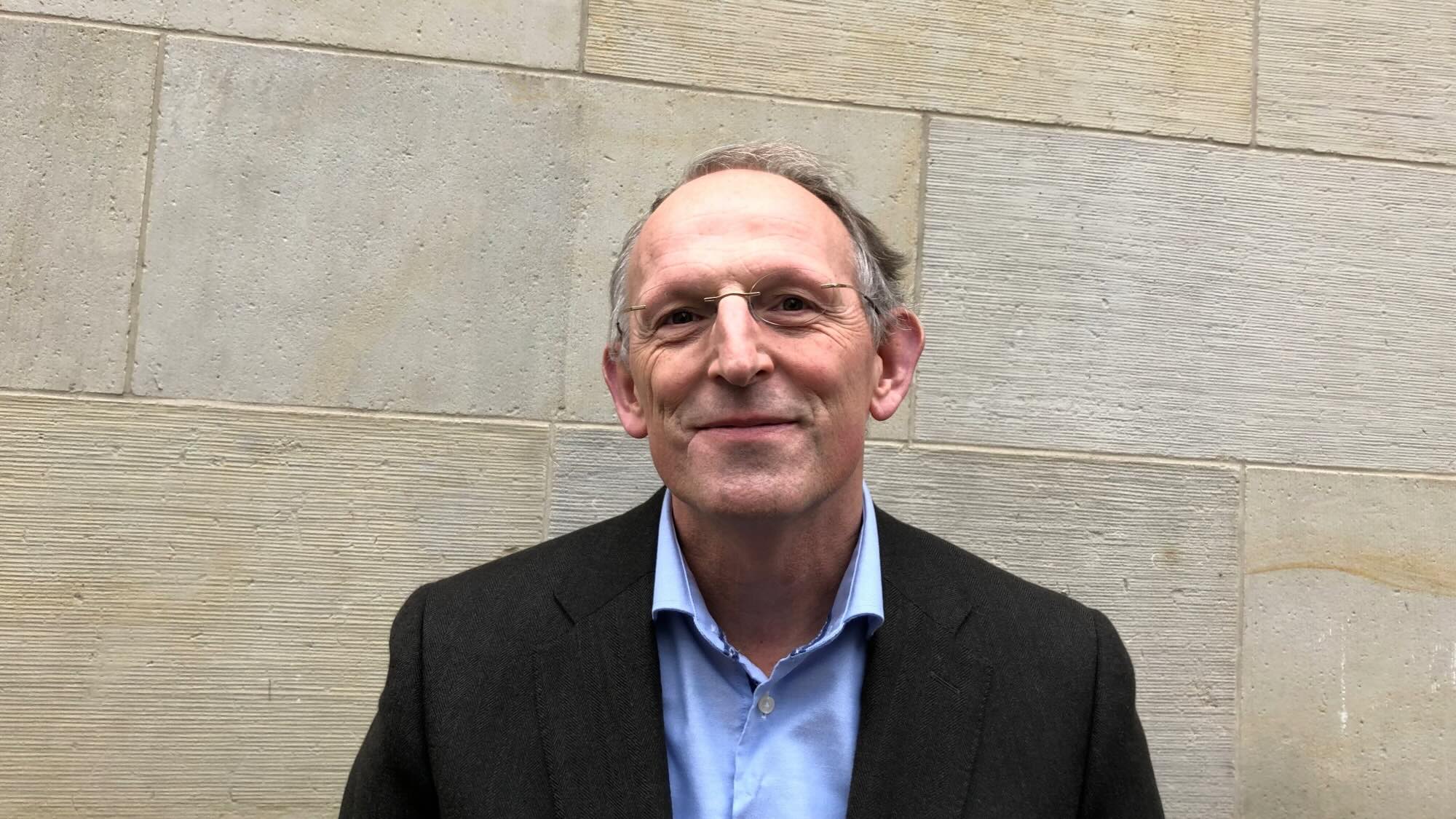
© Ulrike Prange / MARUM
Exceptional Deep-Sea Sponges
Middelburg also studied deep-sea sponges in the Arctic together with marine biologist Professor Antje Boetius, then Director of the Alfred Wegener Institute, and researchers from MARUM and the Max Planck Institute for Marine Microbiology. Their work indicated that some deep-sea sponges can use carbon from very old, geologically stored sources.
Doctoral researcher Anna Biastoch investigated, together with Bremen marine scientist Morten Iversen, how organic carbon travels from the ocean surface into the deep sea. One focus was the way in which phytoplankton clumps together to form larger particles. The larger and more compact these particles are, the more likely they are to sink into the deep ocean.
Their stability is influenced not only by their composition but also by bacteria. On the one hand, bacteria can help hold aggregates together by producing sticky substances. On the other hand, they can decompose organic matter and alter the structure of the particles. Despite the challenges the COVID-19 pandemic posed for laboratory research, Biastoch successfully completed her work and earned her doctorate.
The Ocean Floor Is Not a Carbon Landfill
Middelburg’s own work as an Excellence Chair was likewise initially affected by the pandemic. Nevertheless, he looks back on the first phase of the Excellence Cluster with satisfaction.
“The long-term experiment on marine priming was something unique,” he says. “We were able to work on a marine research topic that receives far less attention than familiar subjects such as ocean acidification, but is nevertheless very, very important.”
Even Middelburg was surprised by the significance of the findings. “I did not expect priming to be so important in marine systems,” Middelburg says. He considers the results to be the opening of an entirely new field of research. “If priming accelerates the carbon cycle in sediments, we need to take a fresh look at which factors influence carbon sequestration.”
This is a question he also intends to pursue further in the second phase of the Excellence Cluster. The findings so far challenge the simplified image of the ocean as a gigantic carbon store – and may therefore also be important for future climate models.
The ocean does absorb large quantities of carbon dioxide and transfers carbon to the ocean floor. But the ocean floor is not a silent landfill. It is an active biological reactor, governed by far more dynamic processes than previously assumed. While human activity impacts organic carbon reservoirs on the shelf – e.g. through trawling – it is ultimately microbes that determine the eventual fate of carbon in the Earth’s largest ecosystem: the ocean floor.