
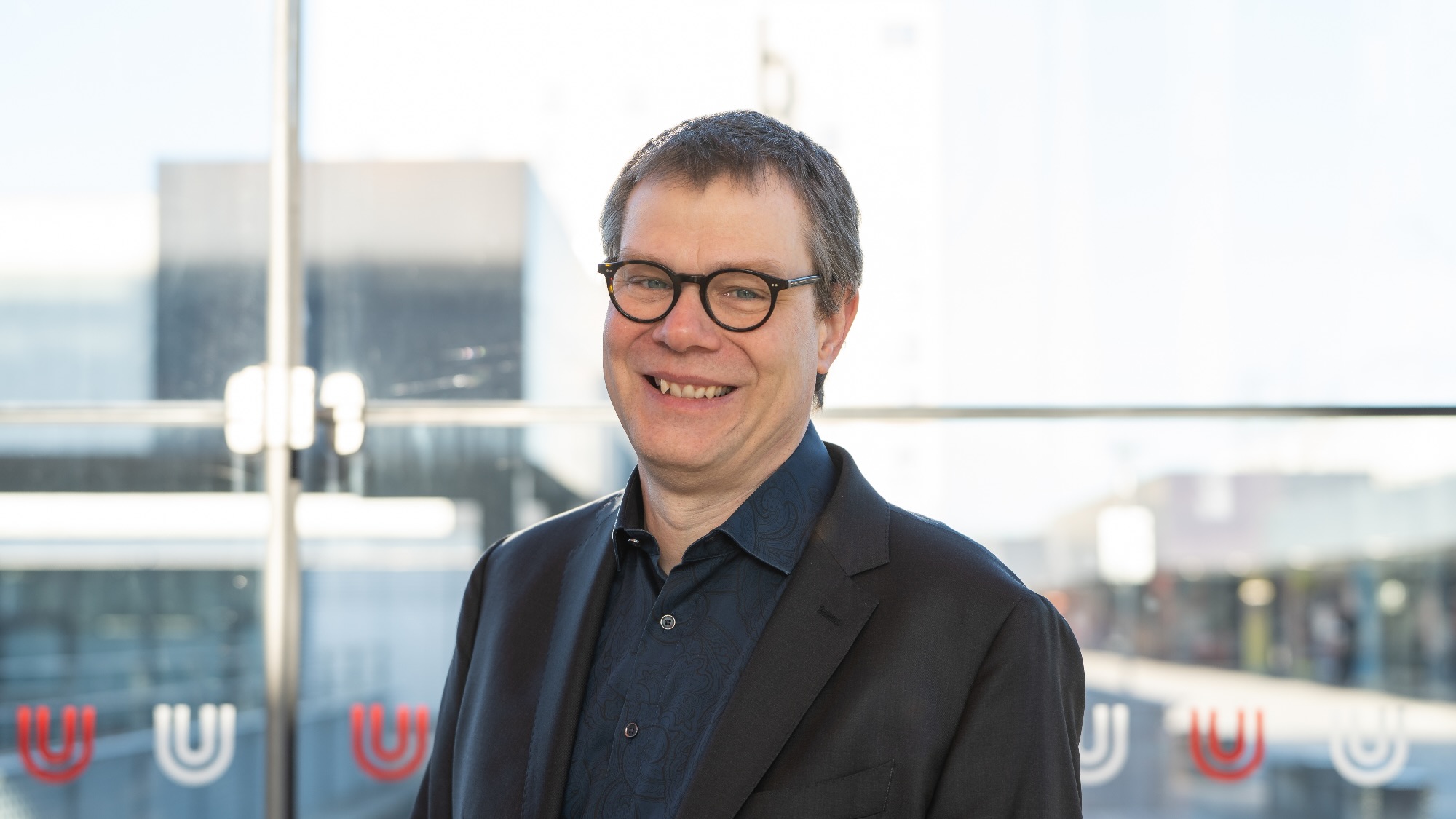
© Leona Hofmann / Universität Bremen
International Day of Democracy: An Interview with Professor Martin Nonhoff
Political scientist Martin Nonhoff on crises and threats to democracy
The United Nations has designated September 15 as the International Day of Democracy. This day is intended to provide an opportunity to reflect on the state of democracy around the world, and to reaffirm fundamental principles such as freedom, human rights, and free elections. up2date. spoke with Martin Nonhoff, a professor of political theory at the University of Bremen.
After the Cold War, democracy was on the rise globally. Now, however, it seems to be under threat. What has changed?
We did see democratization processes as early as the 1970s and 1980s in Portugal and Spain, and in some post-colonial states. But the real global wave began after the Cold War, when the Soviet Union’s influence declined and the United States emerged as a dominant global power. This period saw widespread democratization, especially in Eastern Europe, and it lasted well into the 2000s.
Starting in the late 2000s, several factors began to converge, posing major challenges to democracy and intensifying around 2015. First, several international crises occurred, such as the global financial crisis of 2008, sovereign debt crises in parts of Europe, and prolonged wars in Syria, Afghanistan, and Ukraine. These crises resulted in massive refugee movements. The prolonged pandemic added further strain. And we must not forget the most enduring and complex crisis of all: the climate crisis.
The combination of these challenges has led many to question whether democratic governments are responding effectively, or at least adequately. The complexity of governance, and at times the helplessness of democratic policy makers, has become increasingly visible. Around 2015, this growing frustration contributed to the rise of right-wing populist and, in some cases, far-right movements in many democracies. These movements have often proposed seemingly simple solutions that resonated with large segments of the population. In Germany, this has led to the formation of politically incompatible coalitions among non-far-right parties, creating the perception of constant conflict and instability. At the same time, most democracies are grappling with severe public finance challenges. These pressures are affecting essential institutions, including the legal system universities, schools, and public transportation, and undermining the foundations of a functioning state.
In France, Germany, the United Kingdom, Austria, the Netherlands, and across Western Europe, traditional party systems are eroding, and right-wing populist movements are gaining ground. Is this a threat to democracy?
First of all, we need to clarify what we mean by democracy. Modern democracy is more than just majority rule or regular, free, and fair elections – though these are essential. But even within the realm of democracy as a mode of decision-making and governance, we see growing hostility from right-wing parties. For example, the AfD has repeatedly called for abolishing the multiparty system, and threats of violence against political opponents are commonplace. Right-wing governments often seek to limit the independence of the press, universities, and the judiciary. One infamous example is Viktor Orbán’s government in Hungary. Yet modern democracies, rooted in the American and French Revolutions, are built on the principle of universal human and civil rights, even if this ideal has not always been fully realized. The greatest threat I see posed by far-right and, to some extent, right-wing populist parties is their refusal to recognize these fundamental rights. When AfD figures like Björn Höcke or Lena Kotré spin tales about how Germany could manage with 20 million fewer residents, they are not just making provocative statements. They are clearly denying basic human and civil rights. Such rhetoric opens the door to mass deportations or even genocide. This is the most serious threat to German democracy since its founding.”
When it comes to electric vehicles and economic growth, China appears to be outpacing the West. Tech billionaire Peter Thiel claims democracy is cumbersome and hinders progress. Is there any truth to this?
Two points on this: First, yes, democratic processes can indeed be slow. Many voices are heard, there are a number of players with veto powers, and decisions often require political or legal compromise. But Thiel’s claim doesn’t hold up under historical scrutiny, since liberal democracies have been the most innovative and economically successful systems for decades. China is so far the only major exception: an authoritarian state with strong economic performance. But its sustainability is questionable, especially in light of its ongoing real estate crisis. And even if authoritarian regimes achieve short-term economic gains, I doubt they would deliver the long-term progress Thiel envisions.
“Democracy allows us to live as free and equal individuals, to participate in shaping our societies, and to share collective power.” Martin Nonhoff
Second, even if democracies were more cumbersome and less economically successful at times, that would be a price worth paying. Democracy allows us to live as free and equal individuals, to participate in shaping our societies, and to share collective power. We must never sacrifice this for a little more economic growth – especially when the fruits of that growth would likely be distributed even more unequally under authoritarian rule than they already are.