

© Adobe Stock / Mapics
A Year Abroad in Japan: Life on and off Campus
Master’s student Jasmin on studying and living in Japan
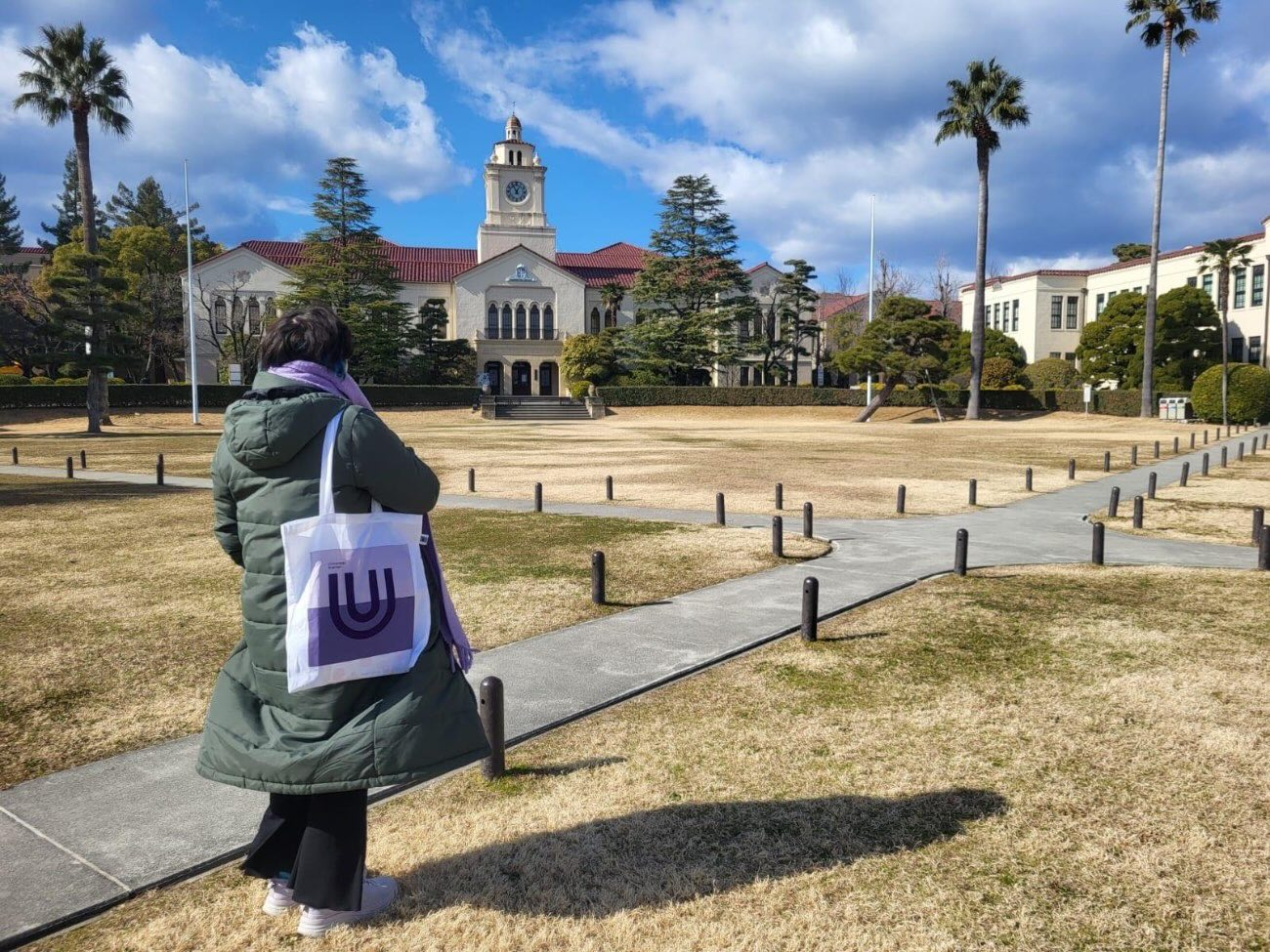
Sushi, kimonos, and manga are often the first things that come to mind when thinking of Japan. What is it like to live and study there, away from these clichés? Jasmin, a master’s student in Transcultural Studies at the University of Bremen, wanted to experience exactly this. She went to Japan for a year abroad and is attending the Kwansei Gakuin University near Osaka. She spoke with up2date. about her experiences at a Japanese university, daily life there, and what advice she has for other students who are considering a year abroad.
You’ve been living and studying in Japan since August. What made you decide to spend your semester abroad there?
I wanted to study for a while outside of Europe since I was a bachelor’s student – preferably in a faraway country where I could get to know a very different culture. Japanese culture is fascinating, and since traveling there wasn’t possible during the pandemic, I decided to do my year abroad during my master’s degree. The Kwansei Gakuin University in Nishinomiya is a partner university of the University of Bremen, and that was an additional reason for applying there. Since there is an established partnership, I thought organizing my stay would be easier – and this also means that I don’t have to pay semester fees. There are five other students from different University of Bremen degree programs here with me.
What are you studying there?
I am studying in the Modern Japan Track, which focuses on cultural sciences. I can select from a range of courses that include Food Culture in Japan, Women in Contemporary Japanese Society, Japanese Traditional Beauty, as well as Japanese language courses. All courses are held in English and both local and visiting students take part in the seminars.
© Privat
What are the biggest differences between studying at a Japanese university or at a German university?
The seminars remind me a bit of classes at school. Courses usually don’t have very many participants, we have individual seats with a chair and desk, and attendance is mandatory. We regularly take tests and have homework. All of this, as well as oral participation, is counted in our grades. There are no tests or assignments during the semester break, which is really nice if you want to travel. Orientation week had a lot of events to get to know people and provided helpful information. Since I don’t speak Japanese, that was especially valuable, and helped me feel like I knew what was going on. At German universities, a much higher priority is placed on individual organization.
What are the living quarters like during your time abroad?
When I applied for the year abroad, I had the option to live in a student dorm, find my own apartment, or live with a host family. The latter is called “home stay,” and the university assists in finding host families. I decided to stay in a dorm and I have my own room, but share the bathroom and kitchen with others. This costs the equivalent of 325 euros each month, but does include cleaning fees for the common areas, and the dorm is fully furnished and close to campus. That was nice because it meant I was able to quickly establish a social circle, since something is always happening.
What has your impression of Japan been so far?
I have noticed that many things are very solution-oriented. When something breaks, it is quickly repaired. They have a lot of smart solutions for small everyday problems. For example, when you enter a business, there is a device for storing your umbrella in a plastic bag to prevent water dripping on the floor.
Public transportation is very reliable, even if the buses are sometimes crowded, and the infrastructure is very good overall. A lot of things seem very advanced and well thought out. However, one negative thing I have noticed is that sustainability is not a big concern. Groceries are often individually wrapped in plastic, and the aforementioned bag for umbrellas is just thrown away afterwards. Also, a trip with the Shinkansen, the bullet train, is often more expensive than a flight.
My biggest challenge here was actually with food. Although the quality is good, there are not a lot of options for me as a vegetarian. There doesn’t seem to be much concern for those with different eating habits and preferences.
What are you going to miss when you return to Germany?
I will definitely miss the convenience stores. These are on every corner, similar to kiosks or “Spätis,” but have a much larger selection with fresh, high-quality food, and many are open 24/7. I can even transfer my rent here, since I don’t have a Japanese bank account.
What tips would you give students who want to spend a semester or two abroad in Japan?
Don’t let the organizational hurdles scare you. The application process involves several steps. Students must first submit an online application to the University of Bremen and then, if approved, submit a separate application to the partner university, which requires a letter of motivation. Due to a misunderstanding, my application was initially rejected, but I was able to resolve the issue. Make sure to ask questions and don’t get discouraged. I didn’t take a language course beforehand, but would recommend doing so. Also, be realistic about your living arrangements, and fully consider whether you’d rather have your own apartment or prefer to have others’ company and share living spaces.
Would you also like to study abroad?
More information about studying abroad at a non-European partner university: Exchange Worldwide
Information about studying abroad with ERASMUS in Europe.
Studying abroad worldwide at universities that aren’t partner universities is possible as well. The International Office can provide further information.