
© Jens Lehmkühler / U Bremen Research Alliance
“Research Data Is Public Property”
The PANGAEA platform ensures worldwide open access to geological and environmental data
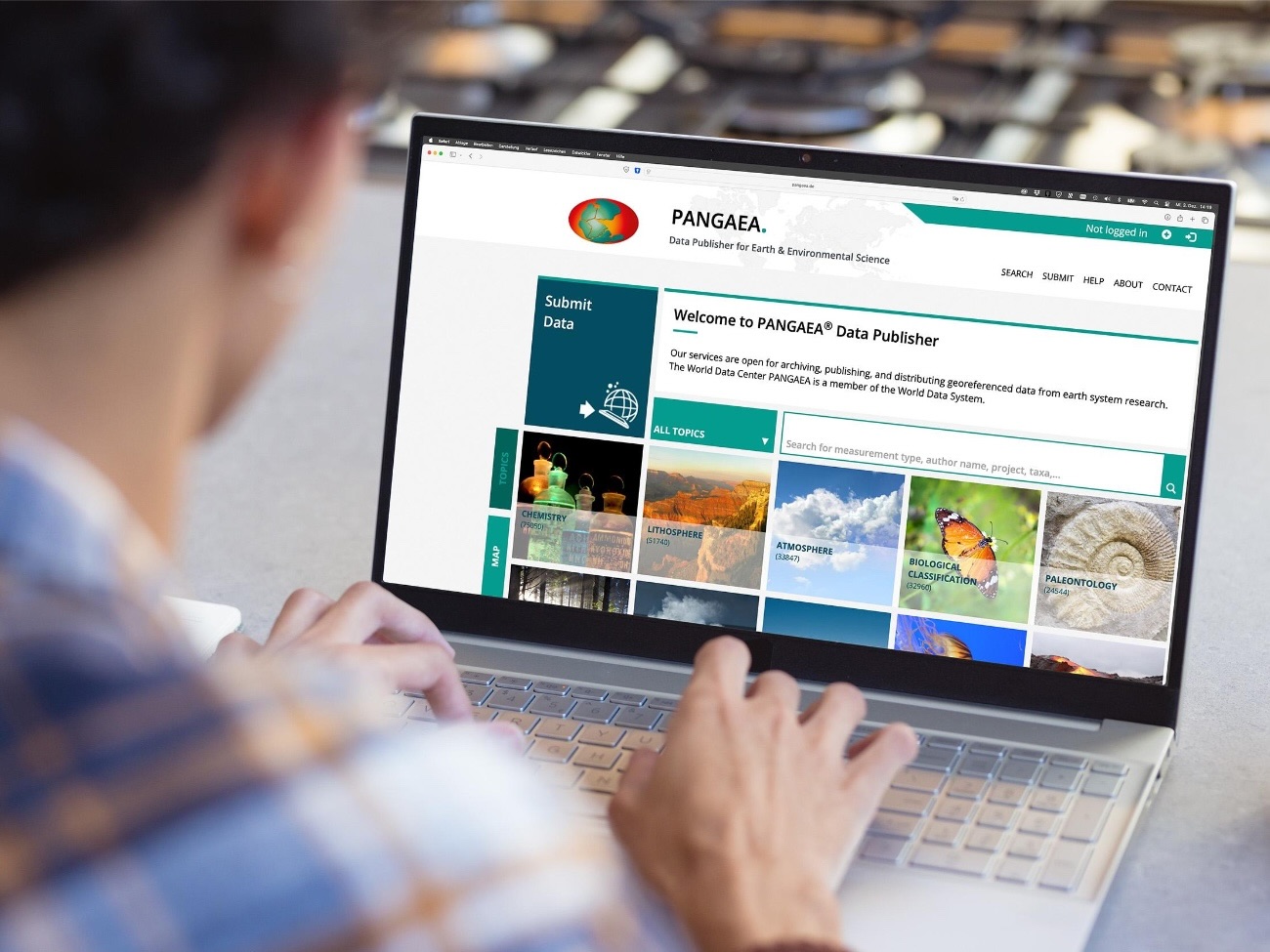
Without data, there can be no progress or breakthroughs; data is the very foundation of research. The online information system PANGAEA ensures that scientists retain access to geological and environmental research data. Supported by member institutions of the U Bremen Research Alliance, the platform guarantees free availability and long-term preservation of research data, thereby safeguarding its sovereignty.
The object that Frank Oliver Glöckner holds between his fingers is about the size of a beer coaster. It is an outdated product called a floppy disk. In the 1990s, Glöckner saved his bioinformatics doctoral dissertation on this medium. At the time, more powerful computers were entering the scientific domain, enabling electronic data processing. “All of a sudden, we could do things that had been unfeasible before. We had completely new information possibilities,” says Glöckner. “That fascinated me.”
© Shanice Allerheiligen
“Many researchers spend more time searching than analyzing.” Prof. Dr. Frank Oliver Glöckner
Today, a dissertation in bioinformatics would not fit on a floppy disk. Science has become vastly much more data-intensive, and digitization has led to an ever-growing flood of data. Research itself has evolved: questions about environmental research are much more global and interdisciplinary now. To understand topics such as climate change or species extinction, we need vast datasets and long-term records.
It’s challenging to retain orientation in huge mountains of data; and finding what you’re looking for is challenging. “Many researchers spend more time searching than analyzing,” says Glöckner. “I ended up in research data management because I was frustrated that data wasn’t where it should have been.”
© Jens Lehmkühler / U Bremen Research Alliance
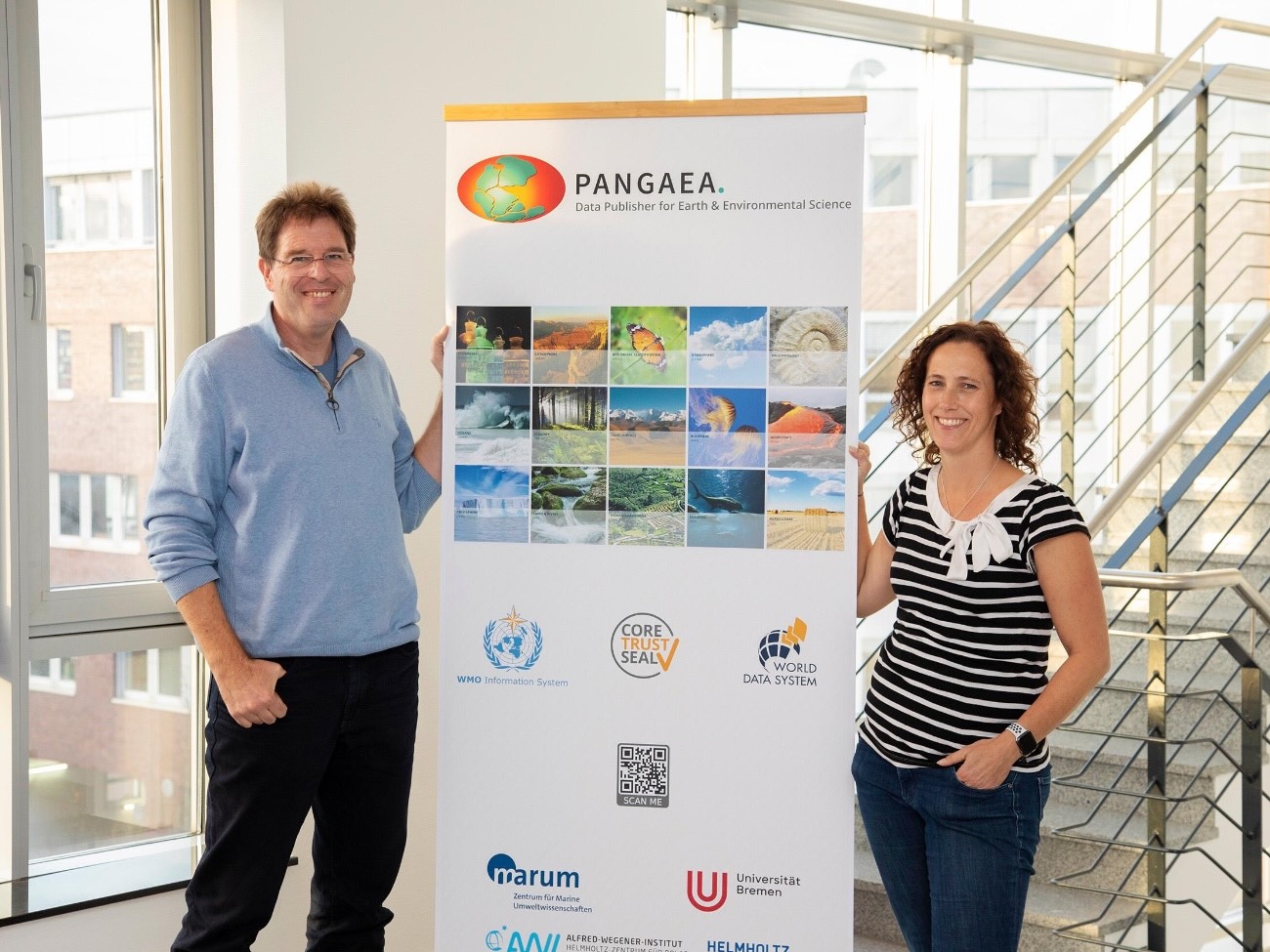
Glöckner is a professor of Earth system data sciences at the University of Bremen and Head of Data at the Alfred Wegener Institute, Helmholtz Centre for Polar and Marine Research (AWI). He and marine biologist Dr. Janine Felden oversee PANGAEA, the largest data publisher for Earth and Environmental Science. The platform recently made headlines for rescuing historically significant U.S. earthquake data at risk of being lost due to budget cuts imposed by the Trump administration (see the box at the end of the text).
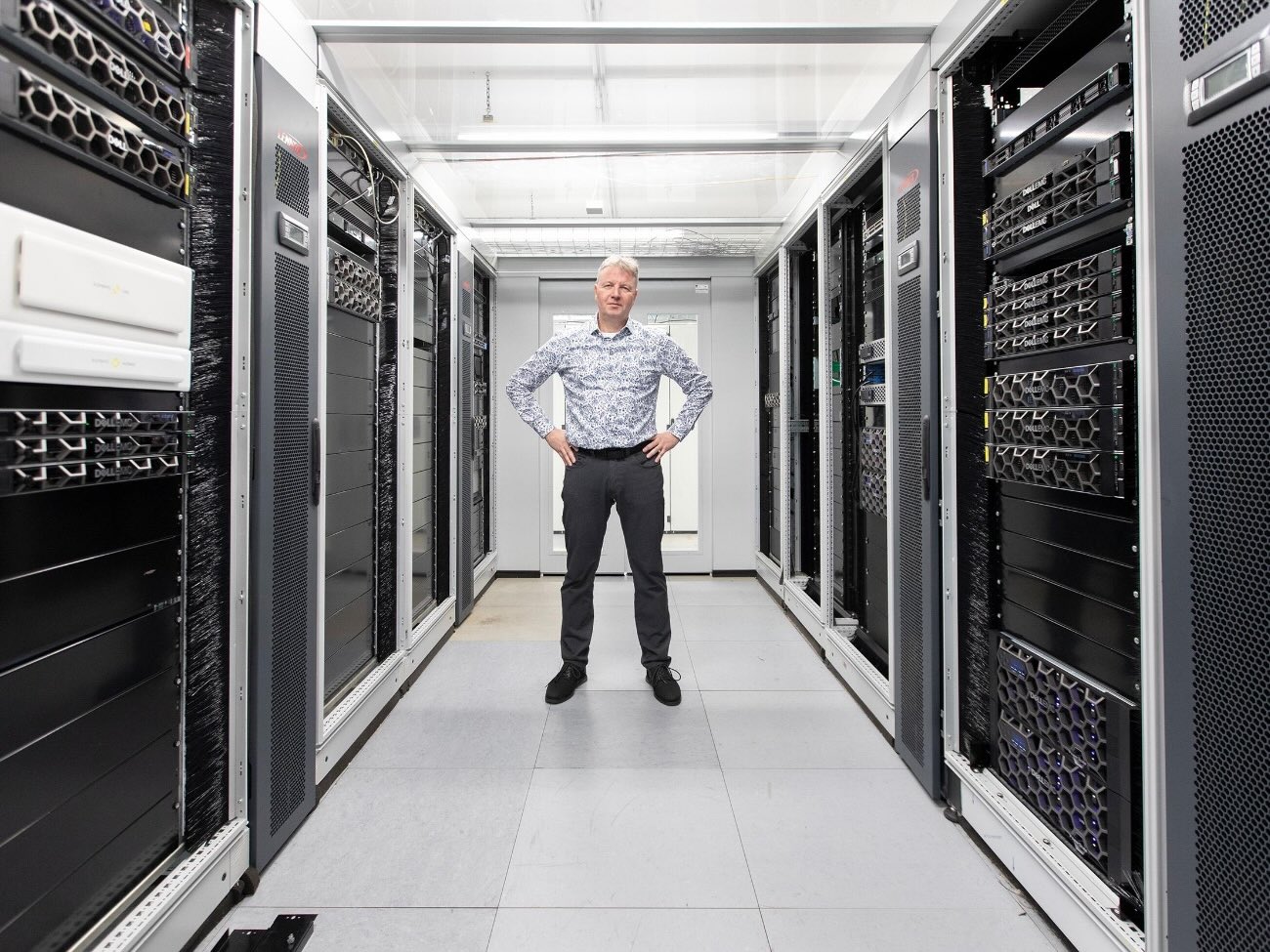
PANGAEA was founded in the 1980s through a joint initiative by AWI and MARUM – Center for Marine Environmental Sciences at the University of Bremen. At the time, the goal was to make sediment cores findable. These two U Bremen Research Alliance members continue to support the platform by sharing costs and hosting servers in Bremerhaven at the AWI building.
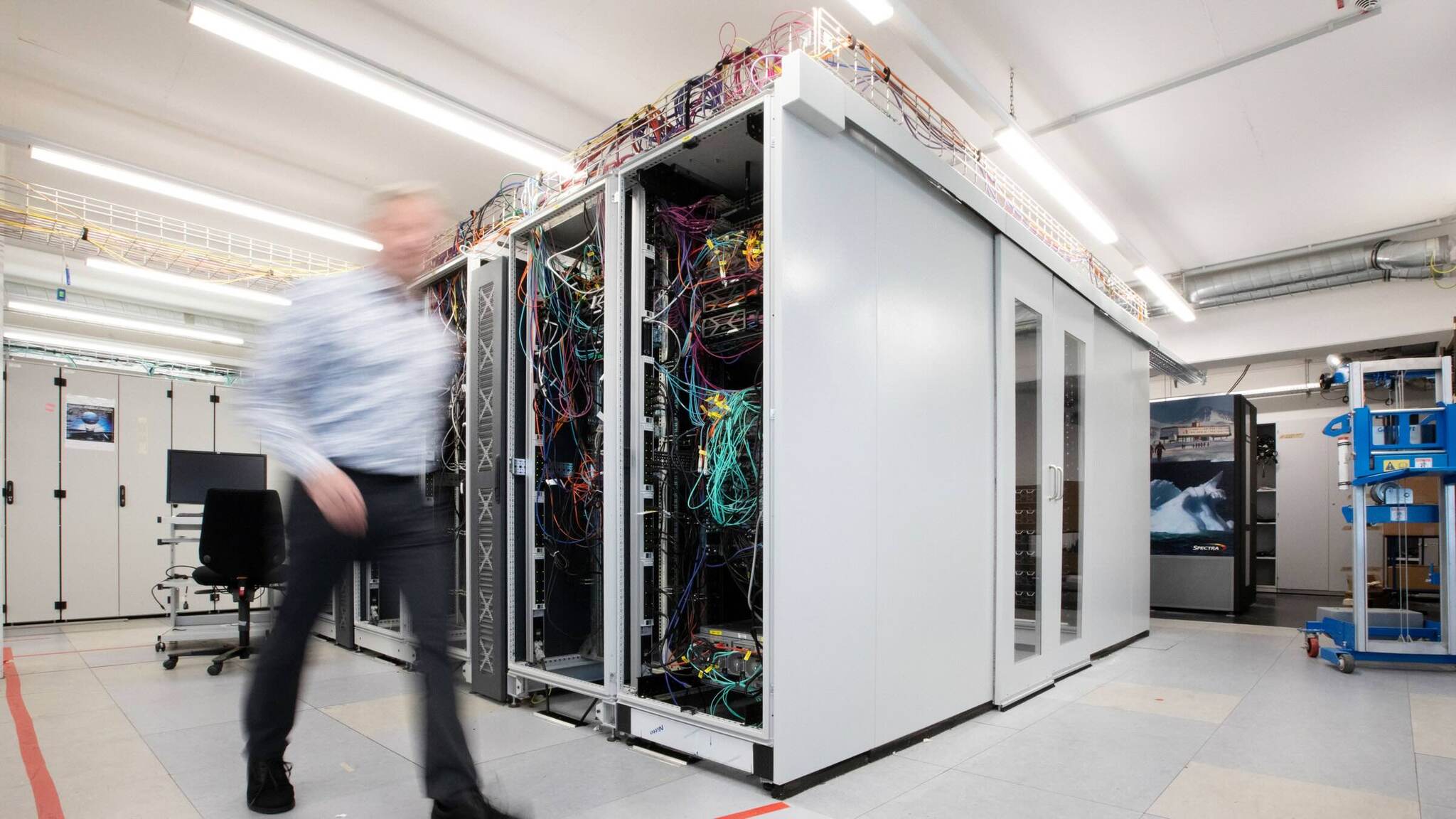
These servers contain over 450,000 data sets with more than 34 billion data points. These include measurements, calculations, statistics, as well as texts, photos, and videos. Data comes from more than 900 projects in geology, biology, oceanography, and atmospheric sciences. “All scientific data from Earth, environmental, and biodiversity research can be integrated into our platform,” says Janine Felden, PANGAEA group leader at AWI. The platform receives more than 400,000 visits annually.
“Bremen is definitely one of a kind when it comes to how it interacts with research data.” Prof. Dr. Frank Oliver Glöckner
Twenty-five employees collect, archive, and publish data; explain how to use PANGAEA in workshops; and support research projects, such as EU projects, as part of a scientific team in data management. Their networking activities help increase visibility and the funding generated in these projects provides additional support for PANGAEA. According to Glöckner, PANGAEA is not a temporary project, but rather an infrastructure designed to last. “The data has been entrusted to us. We manage it reliably and responsibly for the benefit of society as a whole.”
One of PANGAEA’s core responsibilities is ensuring that data is stored in a way that makes it accessible to others. These interactions must be FAIR: findable, accessible, interoperable, and reusable. A robust data network is especially needed for global questions. The more data that is processed, the more accurate the models for climate change or weather forecasts become. Conversely, if data is lost, knowledge is lost. As Janine Felden puts it,
“Without data, nothing works.” Dr. Janine Felden
Data is considered the new gold. When asked about researchers’ willingness to share their “own” groundbreaking data, Glöckner gestures with his hand – a subtle nod to the fact that progress is still needed. Sharing data is not yet part of the scientific reputation system and is not associated with praise. Not everyone recognizes the advantages. It’s also a generational issue that differs between fields, says Felden. Glöckner believes that this makes it even more important that Bremen not only recognized the importance of data management early on and actively encouraged it. This provides the basis for innovative research. “Bremen is definitely one of a kind when it comes to how it interacts with research data,” he says.
Through its member institutions, the U Bremen Research Alliance is involved in twelve of the current twenty-six consortia of the National Research Data Infrastructure (NFDI), spanning fields from natural and life sciences to humanities and social sciences. The NFDI acts as a digital knowledge repository, systematically indexing data sets, which are then secured, networked, and made accessible. “Research data is public property,” says Glöckner, who is also spokesperson for the NFDI4Biodiversity consortium. “It should be freely available. We don’t want the data industry to monopolize it and capitalize on it.”
© Jens Lehmkühler / U Bremen Research Alliance
400,000 PANGAEA Website Visits Each Year
Where expertise exists, additional expertise often follows – and Bremen is no exception. “With the support of the Federal Ministry of Education and Research, Technology and Space, we are very proud to have established DataNord, a data competence center for northern Germany,” explains Glöckner. He highlights the “Data Train” training program, where teaching staff volunteer their time alongside their regular duties. “This is only possible because of the U Bremen Research Alliance, a network that truly values data management.” DataNord is being consolidated into a state-wide data initiative and becoming a permanent institution, and negotiations with the state of Bremen are currently underway.
As the data volume grows, so must storage capacity. Expanding server infrastructure in Bremen is one of PANGAEA’s upcoming activities, partly to reduce dependence on developments in other regions of the world. U.S. budget cuts have sharpened the focus on data that are potentially important but only exist once. “It would be good to have a backup,” says Glöckner dryly. Work to preserve these data sets will be done in collaboration with European partners. The goal is to strengthen data sovereignty and minimize existing dependencies. “Except for SAP, we only use systems that originate in the U.S.,” says Glöckner. Data protection and the use of artificial intelligence must also be improved.
© Freepik / Fotocollage
Janine Felden looks even further ahead, namely to 2027 and 2028. That is when the international measurement campaign “Antarctica InSync” will begin. It is a project comparable in scale to MOSAIC – the largest Arctic expedition in history, in which AWI-led researchers spent the winter on the Polarstern research vessel in the Arctic Ocean. The AWI will once again contribute significantly by providing infrastructure, such as the Polarstern. In this region, which is crucial for our climate, an international team will collect data on the ocean, ice, land, and atmosphere over a twelve-month period using research vessels from various countries. PANGAEA will manage the data on German science platforms. Additionally, PANGAEA will ensure that the data generated in collaboration with an international team of data experts is made available to the scientific community in a timely manner.
Refuge for U.S. Data
Due to budget cuts by the U.S. government, valuable climate and environmental data from the U.S. National Oceanic and Atmospheric Administration (NOAA) was at risk of being lost. PANGAEA responded to the scientists’ call for help and saved the data. This includes the Seismicity Catalog Collection, which contains information on four million earthquakes from 2150 B.C. to 1996, and historical data on hydrothermal vents. The goal is long-term preservation and public availability on PANGAEA. However, not all data can be saved. Funding from the German Research Foundation (DFG) totaling 860,000 euros is supporting the rescue effort. Nevertheless, experts warn that U.S. cuts are creating data gaps that could impair our understanding of global issues like climate change.
PANGAEA Data Rescue Initiative 2025
This article comes from Impact – The U Bremen Research Alliance science magazine
The University of Bremen and 13 federal and state financed non-university research institutes cooperate within the U Bremen Research Alliance. The joint work spans across four high-profile areas literally from “the deep sea into space.” Biannually, Impact science magazine (in German) provides an exciting insight into the effects of cooperative research in Bremen.