
© Jens Lehmkühler
Research on Life-Extending AI
Can artificial intelligence help to predict diseases and extend life expectancy?
The earlier a disease is detected, the better it can be treated. Meanwhile, digital devices and technologies are providing more and more health-related information. Several member institutions of the U Bremen Research Alliance are involved in a research project that aims to develop AI methods for analyzing various data sources to predict the onset of diseases over the long term.
It is a difficult and very personal decision: Would you like to know if there is a likelihood that you will develop Alzheimer’s or dementia in ten or fifteen years? Professor Tanja Schultz decided that she wanted to know, if only to take preventive measures in time to ward off the impending illness. A computer scientist, she is exploring how people could come to know this as part of a project called Lifespan AI, which uses data spanning an individual’s entire lifespan.

© Jens Lehmkühler
“The research group is also an example of the excellent, long-standing collaboration between the institutions and disciplines in Bremen.” Tanja Schultz
The professor of cognitive systems at the University of Bremen is the spokesperson for the research project, which she says opens up great opportunities. The project is receiving 4.7 million euros in funding from the German Research Foundation (DFG); the Bremen-based research group is one of only eight in Germany to receive this funding as part of the DFG’s Artificial Intelligence funding initiative. “We want to help uncover the causes of complex diseases and optimize prevention strategies,” the researcher explains, describing the ambitious aim. The plan is to use AI-based methods to predict the likelihood of a disease occurring.
4.7 million euros: the German Research Foundation grant for the project.
Lifespan AI brings together ten experienced researchers and ten doctoral students, including epidemiologists, computer scientists, statisticians, and mathematicians. Well over 100 early-career researchers applied for the doctoral positions. In addition, a cooperation professorship has been established for machine learning in statistics, a position now held by Professor Marvin N. Wright of the Leibniz Institute for Prevention Research and Epidemiology – BIPS. “The research group is also an example of the excellent, long-standing collaboration between the institutions and disciplines in Bremen,” says Schultz. Three member institutions of the U Bremen Research Alliance are involved in the project, namely, the Fraunhofer Institute for Digital Medicine MEVIS alongside the University of Bremen and BIPS.

© Leona Hofmann
Who is going to get sick in the future, and who is going to stay healthy? Lifespan AI comprises six individual projects. In addition to her coordination duties, Tanja Schultz is involved in two projects that are close to her heart. For example, she is working with statistician Dr. Claudia Börnhorst from BIPS to develop methods for “lifespan AI” that enable predictions of individual health trajectories over an extended period of time. This is because certain chronic conditions, such as dementia or obesity, are believed to develop over a very long period of time, in some cases even while the fetus is still in the womb.
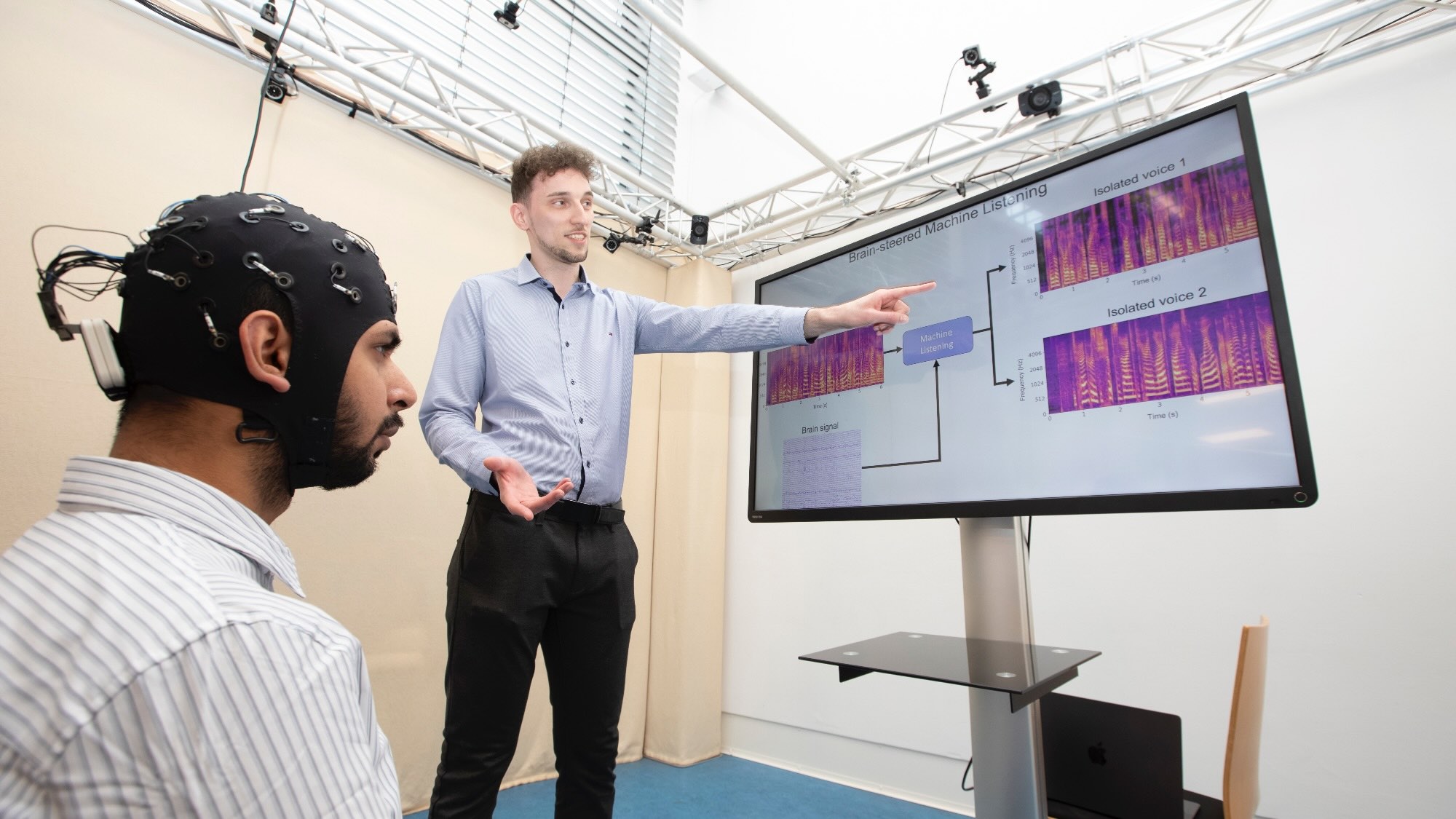
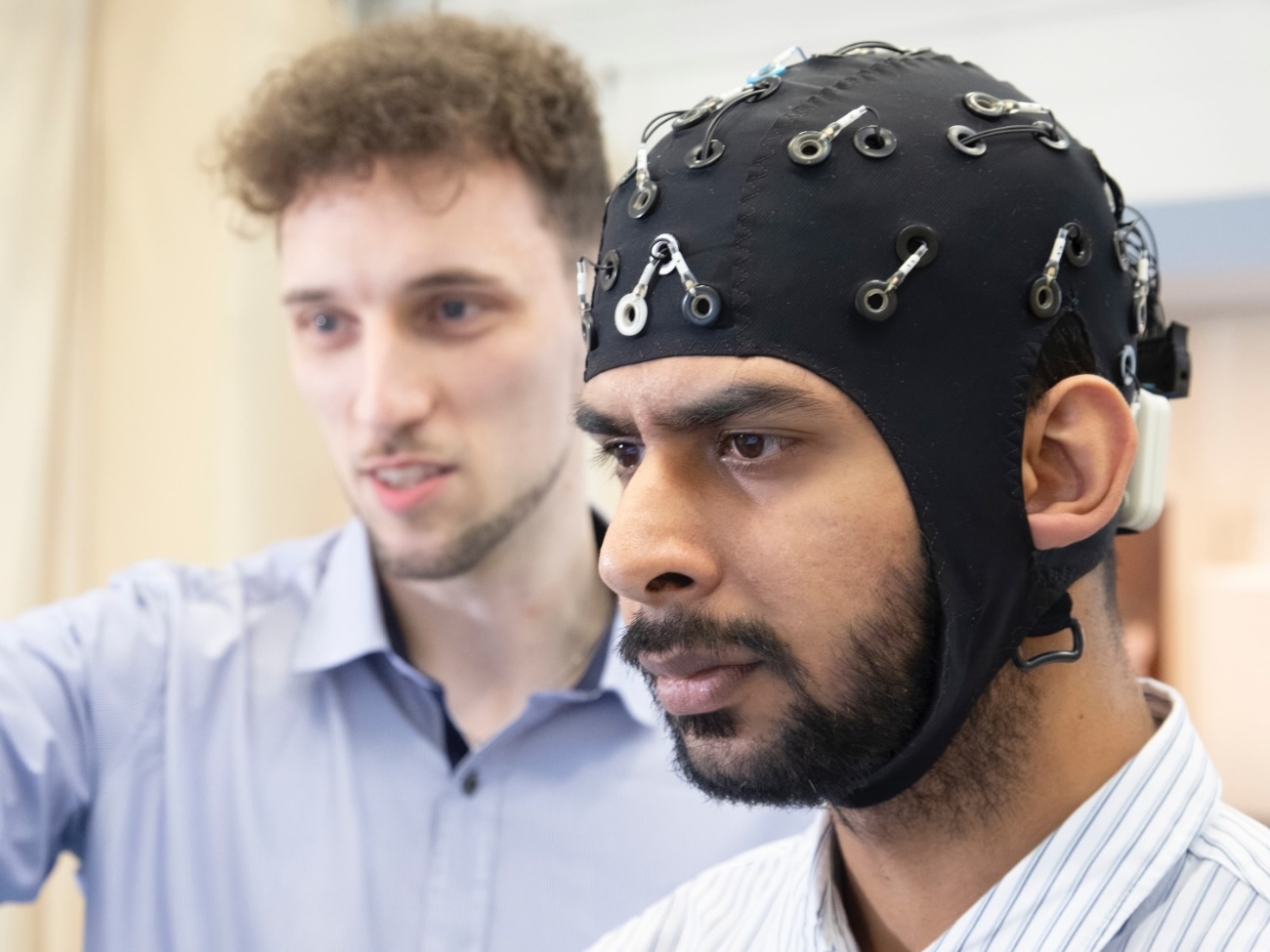
“Science has not yet figured out how to predict diseases with a high degree of certainty before symptoms appear,” explains Schultz. To resolve this, comprehensive epidemiological datasets at BIPS are among the data being analyzed. They were collected over an extended period of time from people of all ages, ranging from children to retirees. They contain not only health data, but also information about their lifestyle and life circumstances. “What I find particularly fascinating is combining these databases with specific biosignal recordings,” says Schultz. Biosignals are pieces of information that are emitted by the body and detected by sensors to provide insight into a person’s state of health. They can include muscle or eye movements, as well as brain activity and speech. This is how long-term data is integrated with day-to-day data.
© Jens Lehmkühler
The second project, conducted in collaboration with Dr. Horst Hahn, director at MEVIS and professor of digital medicine, also focuses on the analysis of health data. It is challenging because the data types involved are often very diverse, ranging from questionnaires and voice recordings to images such as scans of the brain obtained through magnetic resonance imaging (MRI). The aim is to develop integration techniques, or deep-learning-based models, which Schultz believes have the potential to profoundly impact data science and will also be applicable outside the healthcare sector. Data is valuable, but very few people realize this.
“The lifespan aspect is something that is otherwise overlooked. In Lifespan AI, we really need to develop new methods rather than just apply existing ones.” Marvin N. Wright
For this reason, Schultz hopes that her research will help educate the public about all the data that is being “scooped up,” as she puts it, especially since more and more data is being gathered. “When I use a smartwatch to track my steps, most providers gain the rights to my data as soon as I upload it to their servers. That means they take away my rights to my own data, and in my opinion that’s not right,” says Schultz, “People should think about what they do with their data. Those who don’t want to share it should also have the option not to do so.”
Marvin N. Wright, co-spokesperson for Lifespan AI, feels exactly the same way. Like Tanja Schultz, the statistician is also represented in the AI research group with two projects. In simple terms, these projects also concentrate on methodological advances in health data analysis, with an aim of achieving tangible improvements. “The lifespan aspect is something that is otherwise overlooked,” explains Wright, “In Lifespan AI, we really need to develop new methods rather than just apply existing ones.” For him, this combination of method development and application is what makes the project so exciting. “Simply applying methods is boring; developing methods that have no practical application is pointless.”
Wright believes that Lifespan AI is a great fit for Bremen, given the city is a hub for science and the research group combines existing strengths: diverse AI research with expertise in public health. “AI is necessary for handling large amounts of data. Epidemiology helps contextualize predictions about disease progression and identify areas where prevention is most useful.” He says that Lifespan AI enriches research with new perspectives and, in the process, helps bring disciplines closer together.
The first funding phase will end in May 2027. During this phase, the IT infrastructure has been set up, positions filled, and the first studies published. “We have already solved many individual problems such as harmonizing different datasets across a lifespan,” Wright recounts. In the second phase, which has yet to be approved, the plan is to integrate biosignals and incorporate AI methods that were not even available at the time the funding application was submitted. “This field is incredibly fast paced,” says the scientist. The project is scheduled to run for a total of eight years.
Would he, like Tanja Schultz, want to know how likely he is to become seriously ill in the future? Wright nods. “Only when I have that information can I take targeted preventive measures to minimize risk.” He adds that predicting risk is only valuable if intervention is possible – in other words, if the knowledge gained is actually useful, and that is the case with Lifespan AI.
Human-Centered AI
How can biosignals such as speech, muscle activity, or brain activity be used to develop AI tools that support people in their daily lives? This is a question at the heart of a project called “Biosignals-HUB: Biosignal Sensors for Human-Centered AI @ University of Bremen,” which is receiving funding of 4.8 million euros from the State of Bremen and the European Union. Under the direction of Professor Tanja Schultz, the Cognitive Systems Lab is developing innovative mobile biosignal recording devices and establishing a high-performance central storage and computing infrastructure. On top of that, there are plans to create a digital portal which will make the data available to users, researchers, and interested businesses.
This article comes from Impact – The U Bremen Research Alliance science magazine
The University of Bremen and 13 federal and state financed non-university research institutes cooperate within the U Bremen Research Alliance. The joint work spans across four high-profile areas literally from “deep sea to outer space.” Biannually, the Impact science magazine (in German) provides an exciting insight into the effects of cooperative research in Bremen.
Summer of AI
In the summer of 2026, Bremen will become an international meeting point for artificial intelligence. From August 15 to 21, thousands of researchers and guests from around the world will gather for the combined International Joint Conference on Artificial Intelligence and European Conference on Artificial Intelligence IJCAI-ECAI 2026. Under the slogan “Summer of AI,” multiple events will be held free of charge for the general public throughout the city. From August 17 to 21, the AI x Open Lab at Forum at Domshof will offer hands-on experience with cutting-edge AI technologies. At the same venue, AI Lounges will bring together experts and the public in an open, informal setting to discuss the latest developments, opportunities, and challenges in AI. For the full program, visit the official Summer of AI website