© Leona Hofmann / Universität Bremen
“That Was a Major Stepping Stone for My Career”
Young researchers talk about how they benefited from the first round of Excellence funding
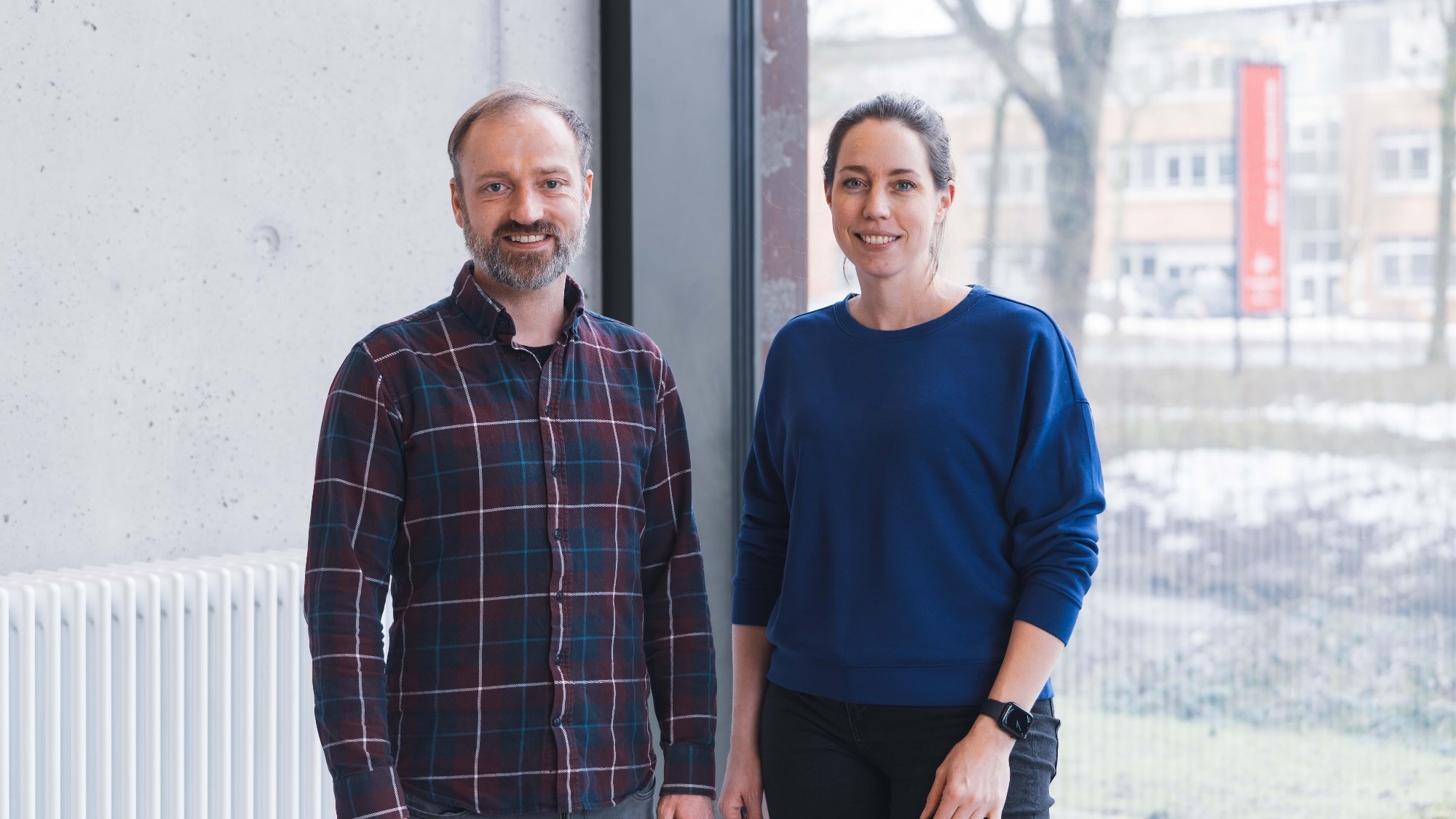
In this interview, marine scientists Charlotte Kleint (39) and Kevin Becker (40) reflect on how important the GLOMAR (Global Change in the Marine Realm) Graduate School was to their careers. GLOMAR was established at the University of Bremen as part of the Excellence Initiative, starting in 2006. The graduate school, which has since evolved into the MARUM Research Academy, offered a wide range of courses, financial support for attending conferences, and above all, networking opportunities with other doctoral researchers.
Charlotte, you currently work as a senior researcher in the “Petrology of the Oceanic Crust” research group within “The Ocean Floor” Cluster of Excellence. How did you end up in this position?
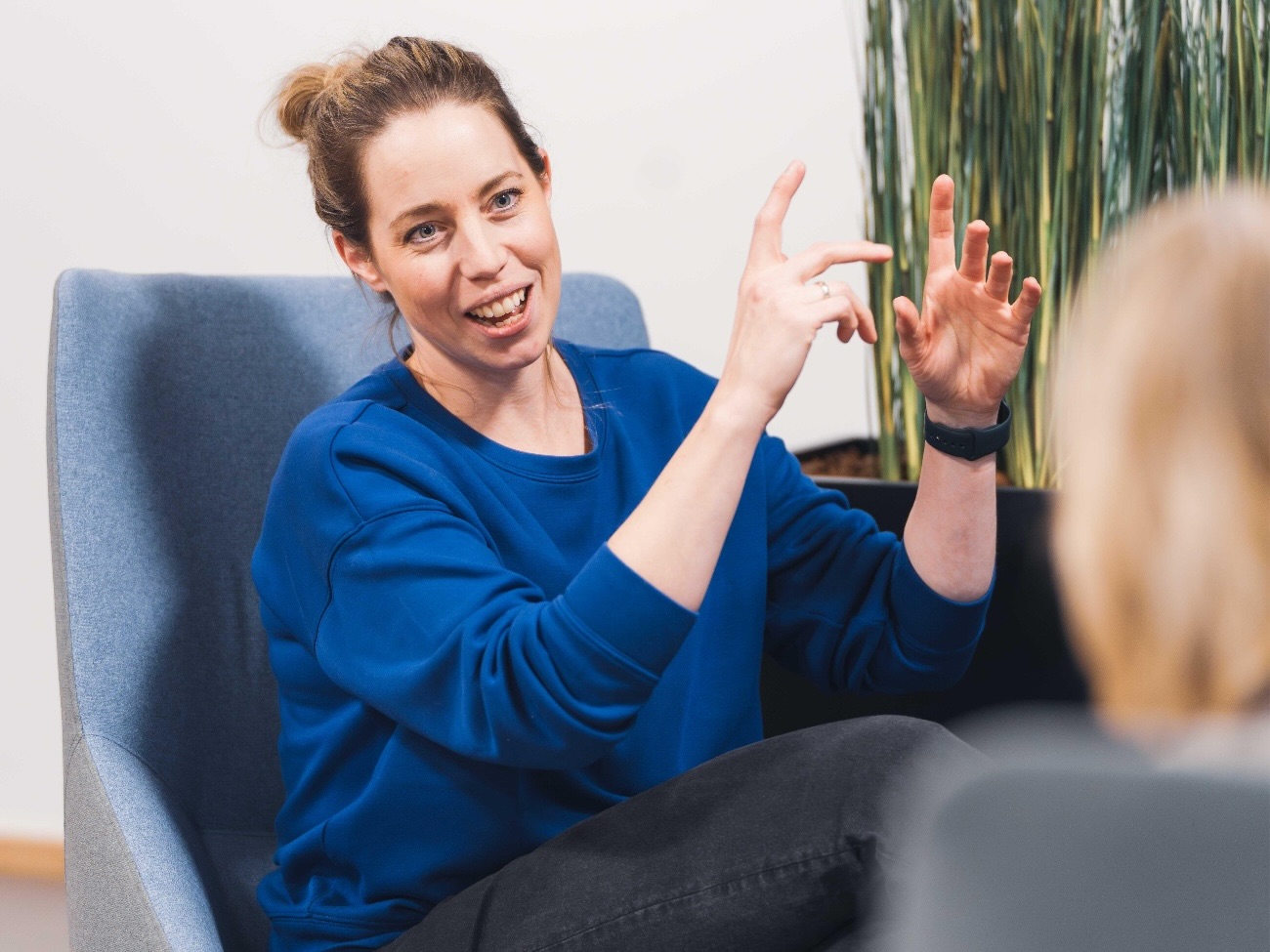
Charlotte Kleint: I’ve been fascinated by the Geosciences ever since I was in school. However, it was my first encounter with manganese nodules while writing my bachelor’s thesis in Hanover that really got me hooked. Manganese nodules are metallic “lumps” found in the deep sea. They contain relatively high concentrations of nickel, copper, and rare earth elements, essentially forming massive deposits of raw materials on the ocean floor. I was eager to learn more, so I pursued a master’s degree in Marine Geosciences at the University of Bremen. I subsequently completed my doctorate at Jacobs University, now known as Constructor University. My PhD supervisor, Professor Andrea Koschinsky, is affiliated with MARUM – Center for Marine Environmental Sciences. That’s how I stayed connected to the University of Bremen and MARUM and ultimately ended up at GLOMAR.
© Leona Hofmann / Universität Bremen
How exactly did you join GLOMAR? Did you just walk in and say: “I want to do my PhD in marine sciences; please accept me?”
Charlotte Kleint (laughs): Actually, it was a bit more formal than that. We had to submit an application including a motivation letter that described what I wanted to explore in my PhD dissertation, why I wanted to join GLOMAR, and what I hoped to gain from it. The purpose was to ensure that we joined consciously. But once accepted, there were no unnecessary obstacles. It was clear that PhD candidates were expected to engage with the GLOMAR community and build connections there.
Kevin, you now work as a researcher in the Carbon Sequestration and Glycobiochemistry research group at MARUM and Faculty 2 (Biology / Chemistry). What exactly are you working on?
Kevin Becker: My research focuses on the marine carbon cycle. Understanding precisely how this cycle works is crucial because it affects the climate. A good example is algae, which use sunlight and water to absorb CO2 through photosynthesis. When algae die, much of the carbon is released again through microbial decomposition, but not all of it. A small portion sinks to the ocean floor and is permanently removed from the atmosphere. We want to find out how this process works.
How long have you been studying the carbon cycle? Did you write your dissertation on this topic?
Kevin Becker: When I began my undergraduate studies in Earth Sciences in 2006, I had no idea where my journey would take me. That became clear later when I progressed further in my degree. During my doctoral research at MARUM, I focused on organic geochemistry and searched for biomarkers in sediments to determine what forms of life exist there, and, more broadly, what role they play in the carbon cycle. My current research interests were further solidified during a nearly four-year stay at an oceanographic research institute in the U.S. and another six years at the GEOMAR Helmholtz Centre for Ocean Research in Kiel. In Kiel, my research concentrated on the role of algae and other microorganisms in the marine carbon cycle.
You joined GLOMAR around the same time as Charlotte, around 2012, if I’m not mistaken. Did you two cross paths back then?
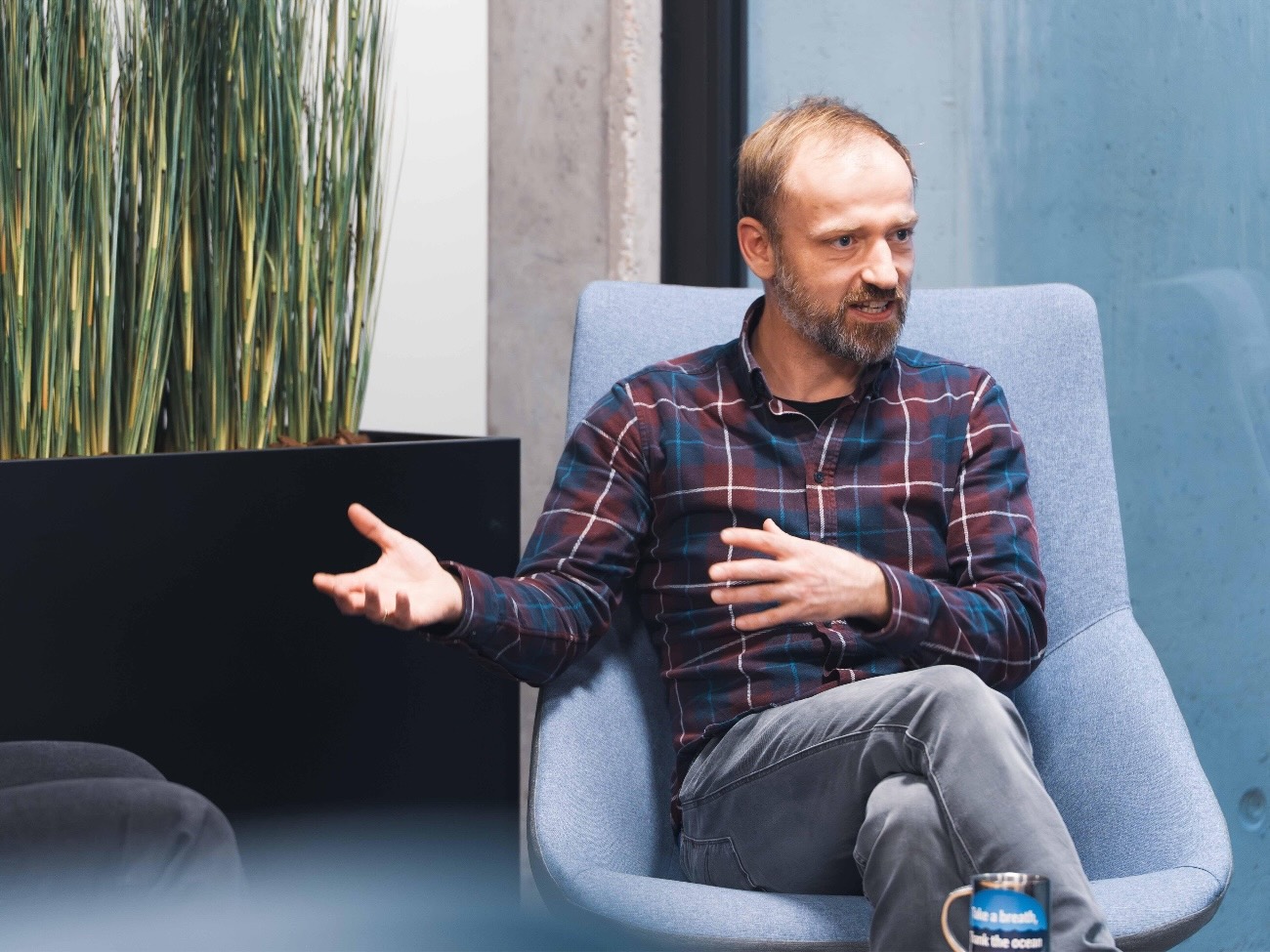
Kevin Becker: Likely yes, although I can’t recall any specific occasion. At GLOMAR, you met so many like-minded people. The chance to exchange ideas with people in similar situations, no matter what their specific field of marine science was, was one of the major benefits of the graduate school. It brought together nearly all PhD students who were somehow involved in the field from Bremen and the region. One of the strongest aspects of the Bremen research environment is that there are so many top-tier institutes concentrated in such a small area: MARUM, the Leibniz Centre for Tropical Marine Research, the Max Planck Institute for Marine Microbiology, and Constructor University (formerly Jacobs University). There was always a shared topic to connect with.
© Leona Hofmann / Universität Bremen
What did that look like in practice? Did you just meet casually, or was there a set program?
Kevin Becker: Both. There was an extensive range of activities on offer. We were able to attend a wide variety of courses on topics such as an introduction to the marine carbon cycle, as well as advanced courses for deeper academic discussions. As a young doctoral researcher, the “soft skills” courses were particularly important to me. Here, I learned how to write scientific papers, among other things. I had already written my master’s thesis, but it’s quite different to write for a scientific journal and consider how to structure a paper, organize the arguments, and use the correct technical jargon. This writing course was very valuable for my whole professional life.
Charlotte Kleint: Another key benefit is that GLOMAR also provided financial support for attending conferences and staying abroad. I attended international conferences in the U.S. and spent several months on a research stay in New Zealand. I believe that networking is one of the most important aspects of an academic career. No matter how strong your work is, if nobody knows you, you won’t get anywhere. GLOMAR covered a large portion of the costs back then, which was fantastic. Of course, it wasn’t automatically granted to you; we had to write an application with a detailed explanation of why we wanted to attend the conference and what we would present there. Afterward, we had to submit a report on how it went. So, it wasn’t a free pass, but it was a major stepping stone.
That sounds like GLOMAR was a career booster.
Charlotte Kleint: Probably, though honestly, we’ll never know how things would have turned out without GLOMAR. For me personally, it was an opportunity to get involved with MARUM, which was already one of the leading marine research institutes back then. And since then, a lot has happened. The opportunities GLOMAR has offered us have been steadily expanded. The doctoral researchers today have completely different options at the MARUM Research Academy. For example, today, there are even courses on mental health, because people have realized that it is an increasingly important issue. Researchers are becoming much more aware that stress can sometimes be overwhelming, and that they need to find a way to cope with it.
Kevin Becker: In my current role, I’m also involved in hiring new PhD candidates. What stands out is that almost all applicants ask whether there is a graduate school here and how comprehensive the program is, also beyond purely academic topics. While this was still new and pioneering in our day, it has become standard practice today. Simply because it has been proven successful – and not just for PhD candidates. The current program offered by the MARUM Research Academy appeals to postdocs, early-career researchers, and junior research group leaders as well.
The University of Bremen is currently partnering with the University of Oldenburg to reapply for the title of “University of Excellence.” In your opinion, what could this mean for researchers?
Kevin Becker: The years as a University of Excellence, from 2012 to 2019, certainly advanced top-tier research in the marine sciences. Bremen became more visible and attractive to leading researchers – also from abroad. Today’s “Ocean Floor” Cluster of Excellence is large, with many disciplines involved. This means that research has been growing in terms of both scope and quality. Ultimately, everyone involved in marine sciences in Bremen benefits from this.