

© KI-Bild, erzeugt mit Google Gemini
Why AI Needs More Diversity
Artificial intelligence’s blind spots
Artificial intelligence is not a neutral, objective technology. The people who develop it and the data that is used for that shape the systems’ view of the world – and the access to them. Researchers in Bremen are investigating how to improve diversity and inclusion and, by extension, the quality and sustainability of AI systems.
While it has certainly improved, it is still far from good: If you asked AI two years ago to depict a queer person, it would always show you someone with pink hair. Today, when you put in the same prompt, the image generator produces an image of a young person with a friendly expression, colorful hair, rainbow tattoos, and rainbow images in the background.
Another stereotype, of course! And there is nothing else it could be. After all, the visualization is based on the statistical average of a large but thematically limited dataset in which queer people remain underrepresented. Just as queer people are often portrayed in rainbow-colored imagery, successful businesspeople are typically depicted as white, middle-aged men in suits. Marginalized groups, such as people with dark or very light skin tones, children, the elderly, and people with disabilities, are underrepresented in the current language and image models developed by Google, Meta, and OpenAI. The stereotypes are systemic, and AI reproduces and reinforces them.
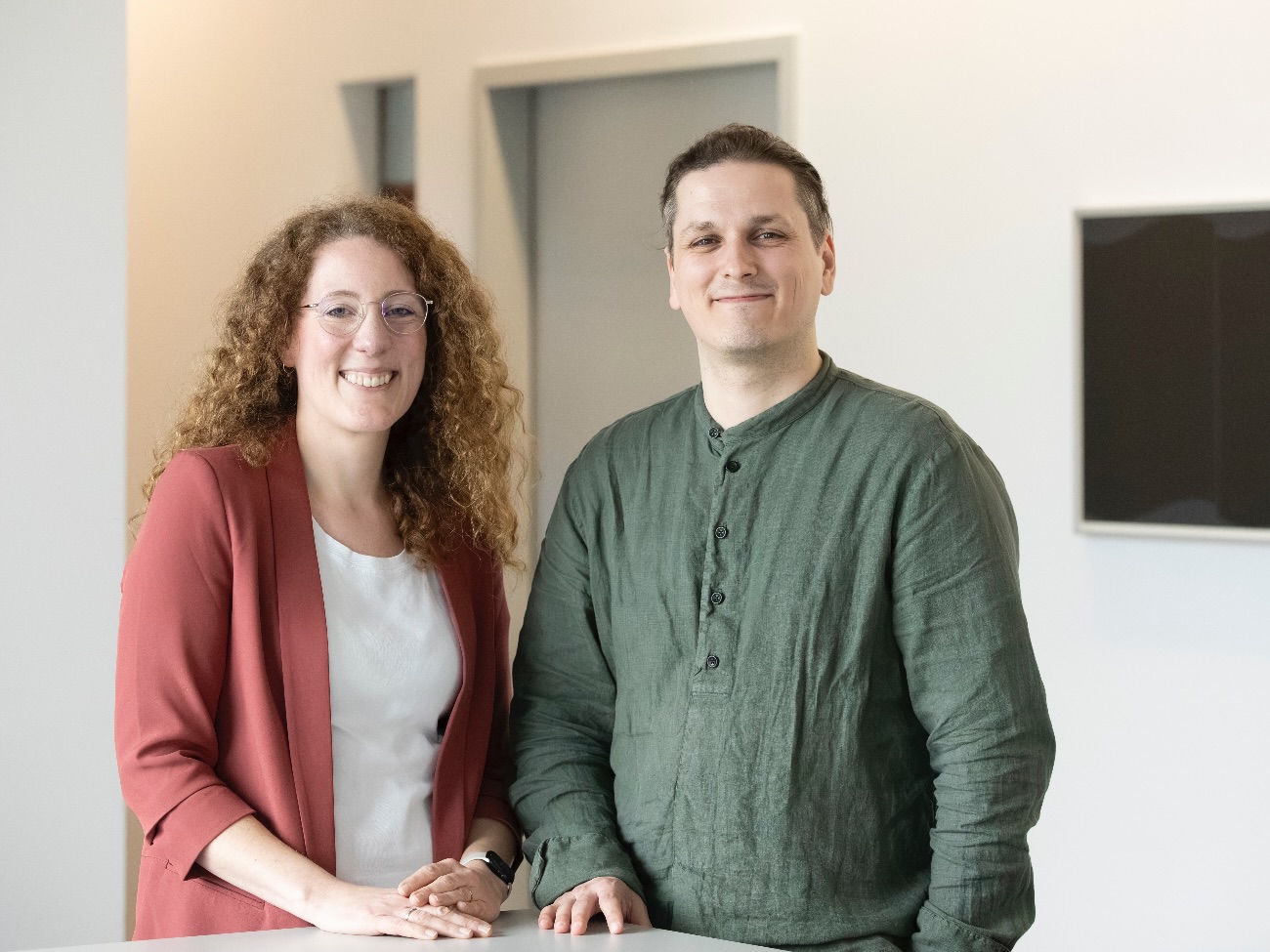
“If we consider diversity and inclusion from the outset, we will also think more realistically about technical requirements.” Prof. Dr. Martin Mundt
© Jens Lehmkühler
Dr. Martin Mundt is dissatisfied with that. Not only as a researcher and as Professor of Lifelong Machine Learning at the University of Bremen, a member institution of the U Bremen Research Alliance, where he works on sustainable and participatory design for AI systems. But also as someone who himself identifies as queer and is involved in the international “Queer in AI” initiative.
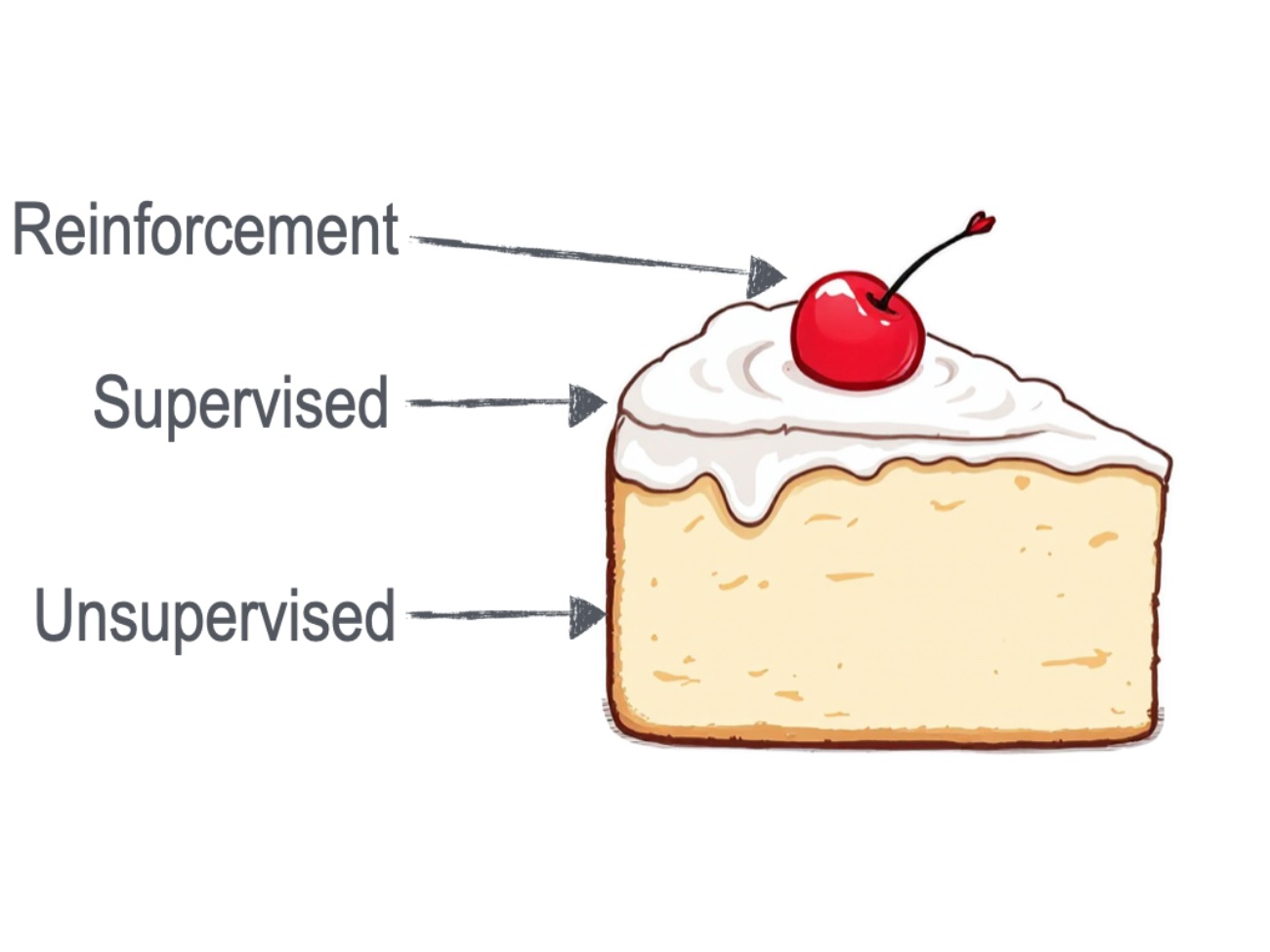
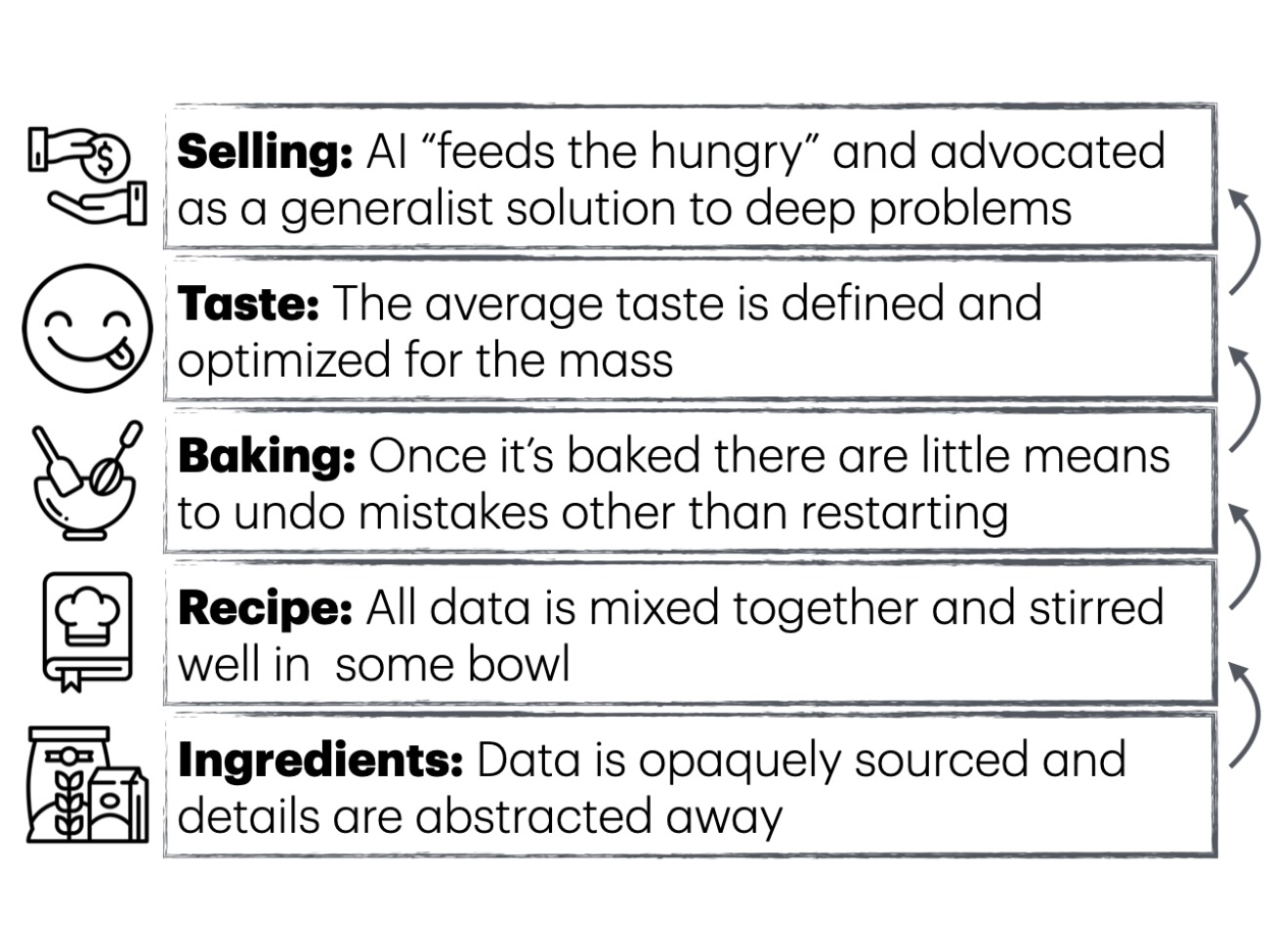
In a recently published article, the computer scientist and his colleagues used the example of a cake to explain how such an AI system is developed and how it can be improved, from gathering the ingredients (data) and formulating the recipes (instructions) to baking (training), tasting, and finally selling the cake (see box at the end of the text). “This baking process is very one-sided,” explains Mundt, “And once the cake is baked, it is very difficult to change it.”
© Prof. Dr. Martin Mundt
© Prof. Dr. Martin Mundt
Yet his working group is doing research precisely to expand the list of ingredients and enable a baking process that better reflects society’s diversity. “If we consider diversity and inclusion from the outset, we will also think more realistically about technical requirements. This will create more meaningful, robust systems that can handle conflicting information and opinions,” Mundt explains.
His team is working on tools that make it possible to update existing systems, for example, by adding new data. This feedback system is challenging from a technical standpoint, because the job is not done by simply adding data. “It is incredibly difficult to build a system that caters to all possible demographics,” Mundt admits, adding: “A universally fair solution is impossible because there are always conflicting interests among different sectors of the population.”
He believes that achieving greater diversity in AI not only requires technical solutions, but also dialogue and engagement with groups that contribute their perspectives, raise awareness, and exert pressure on lawmakers and companies. “These community activities serve as a signal,” says Mundt with conviction. According to him, such activities also help ensure that the information from sources such as chatbots is more nuanced. “A bottom-up structure is essential,” the 36-year-old emphasizes, saying that AI systems should be developed adaptively through dialogue and not in a top-down manner. “As researchers, we can help build bridges by providing mechanisms for participation.”
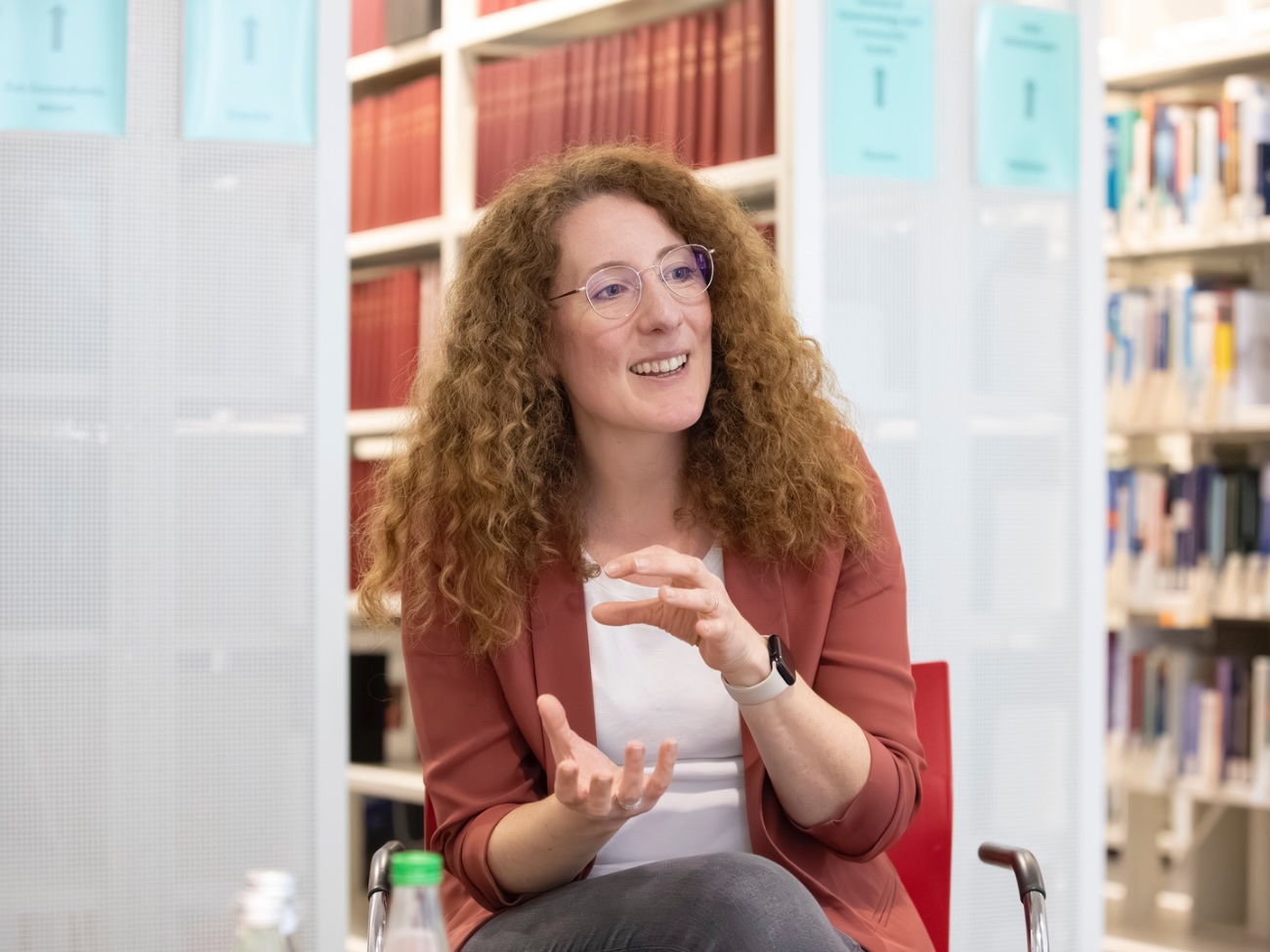
Dr. Saskia Müllmann is someone else who would like to see users become more involved and their needs given greater priority. The researcher works at the Leibniz Institute for Prevention Research and Epidemiology – BIPS, another member institution of the U Bremen Research Alliance. At the Leibniz Science Campus Digital Public Health, her research focuses on, among other things, barriers to the use of digital health technologies for supporting the prevention, detection, monitoring, or treatment of diseases. In general, the 38-year-old says, these systems provide a lot of helpful information, although not all segments of the population benefit from them equally. “The elderly or those with limited German language skills are often excluded from the digital sphere, despite the availability of translation tools. Digital offerings particularly benefit those who are already better off,” she says.
© Jens Lehmkühler
“Many people first need to learn that Google is not their friend and that they should not automatically accept all cookies. There is often no awareness at all of the need to look at data critically.” Dr. Saskia Müllmann
In her view, the recently introduced electronic health record is an example of the growing digital divide. “Many groups feel that it was simply imposed on them; they feel excluded from the process,” explains Saskia Müllmann. Despite being genuinely open to new things, this kind of imposition reinforces the feeling of being excluded. “We need to keep them included for that reason, and also for the simple reason that many of them lack the skills to install an app in the first place.”
In addition to technical barriers, using AI systems also poses a challenge. It begins when trying to formulate questions to get the desired information, and it continues through to the evaluation of the information. Is that information reliable? What is its source? “Many people first need to learn that Google is not their friend and that they should not automatically accept all cookies. There is often no awareness at all of the need to look at data critically,” says the health scientist.
© Jens Lehmkühler
Müllmann works closely with the community, including at the Leibniz Living Lab in Osterholz, one of Bremen’s most diverse neighborhoods. Its health workshop maintains close ties with schools, cultural institutions, and mother-and-child centers. It is a place for exchange and training, so local residents are actively involved in research on digital health literacy.
“While we do not develop algorithms ourselves, we can provide feedback to the developers on how their systems are being received and, in doing so, influence technical aspects as well,” says Saskia Müllmann, who wishes the systems to be easier to use and more accessible.
To ensure that different segments of the population can benefit from digital opportunities and their development, there needs to be interdisciplinary teams and well-connected locations working on a variety of topics. “That is exactly what Bremen has,” says Saskia Müllmann happily. One example of these connections is the U Bremen Research Alliance, which connects the University of Bremen with 13 non-university research institutes. From basic research to applications in robotics and health promotion, it brings experts together.
Inclusion and diversity in AI development are an ongoing issue, says Martin Mundt. They require active, continuous effort over many years, he emphasizes. Participatory AI system design will also be a topic of discussion at the International Joint Conference on Artificial Intelligence (IJCAI), the world’s oldest and one of the most prestigious conferences on AI. It will be held in Bremen in August and likely attract several thousand attendees. Martin Mundt, as Chair of Diversity and Inclusion, will be making sure of this.
A More Delicious AI Cake
From ingredients to tasting: The article “The Cake That Is Intelligence and Who Gets to Bake It” explains how the statistical assumptions in machine learning produce a classic AI “cake” and what social implications this has. Co-authored by Professor Martin Mundt of the University of Bremen, among other contributors, the article draws on an analogy by computer scientist Yann LeCun to spell out why the shift toward more cooperative AI systems is not only a societal challenge, but is also constrained by the basic technical conditions that exist. The article also shows how the cake can be made more sustainable, with practical recommendations for each stage of the baking process.
This article comes from Impact – The U Bremen Research Alliance science magazine
The University of Bremen and 13 federal and state financed non-university research institutes cooperate within the U Bremen Research Alliance. The joint work spans across four high-profile areas literally from “deep sea to outer space.” Biannually, the Impact science magazine (in German) provides an exciting insight into the effects of cooperative research in Bremen.
Summer of AI
In the summer of 2026, Bremen will become an international meeting point for artificial intelligence. From August 15 to 21, thousands of researchers and guests from around the world will gather for the combined International Joint Conference on Artificial Intelligence and European Conference on Artificial Intelligence IJCAI-ECAI 2026. Under the slogan “Summer of AI,” multiple events will be held free of charge for the general public throughout the city. From August 17 to 21, the AI x Open Lab at Forum at Domshof will offer hands-on experience with cutting-edge AI technologies. At the same venue, AI Lounges will bring together experts and the public in an open, informal setting to discuss the latest developments, opportunities, and challenges in AI. For the full program, visit the official Summer of AI website