
© Matej Meza / Universität Bremen
Beekeeping with a Global Perspective
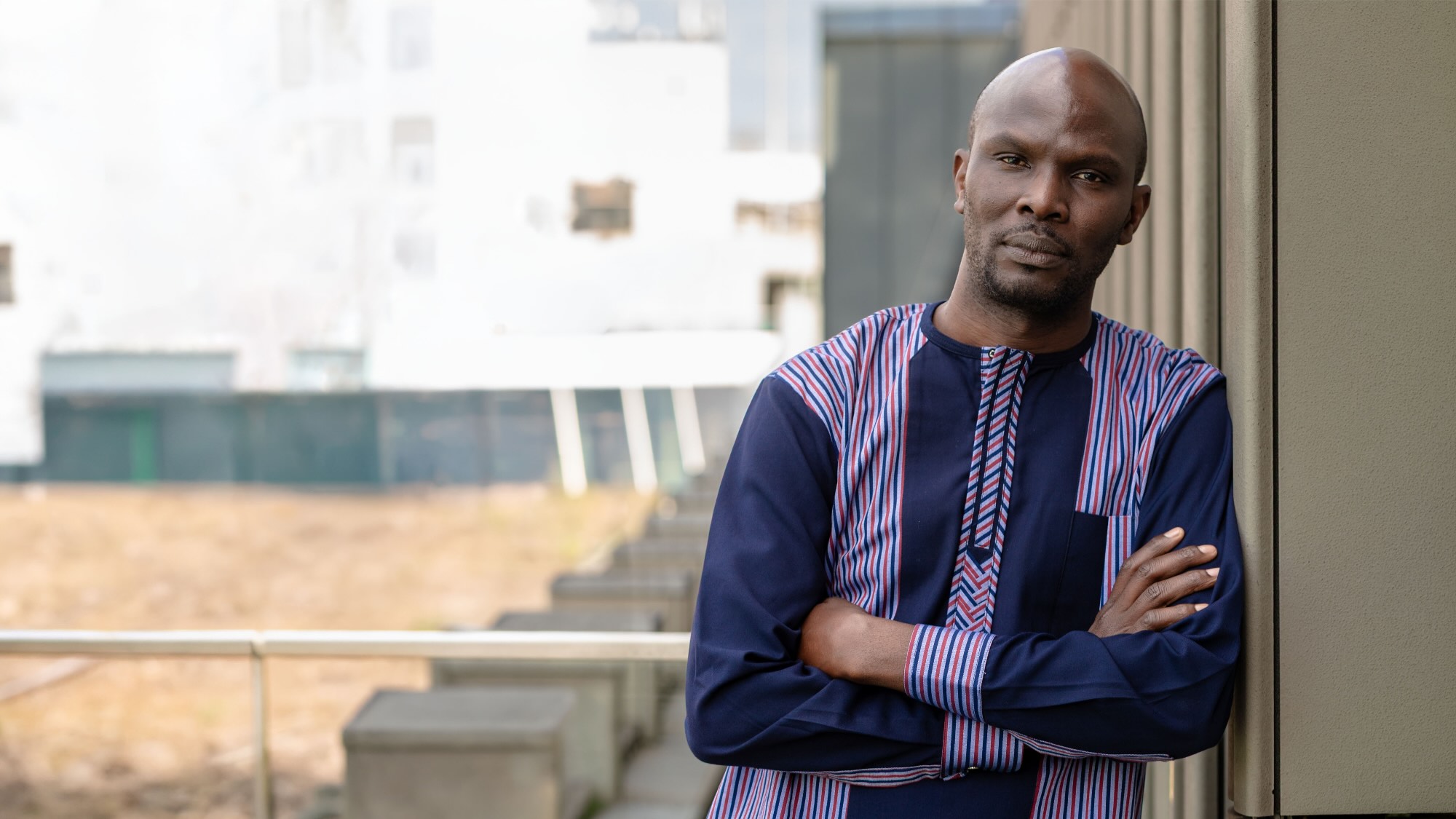
Cameroonian biologist Mazi Sanda is spending one year at the University of Bremen, bringing fresh perspectives to teaching
It’s golden, sweet, and sticky – yet honey from Cameroon tastes unlike any other. Darker, spicier, sometimes almost smoky. “You can taste the scent of the savanna in the honey,” says Mazi Sanda, Junior Associate Professor of Ecology from the University of Ngaoundéré in Cameroon. He shares this honey with students in his seminar at the University of Bremen as part of a broader exploration of beekeeping in Cameroon and other African countries
Mazi Sanda wants to use his visit to provide students in numerous courses with international perspectives, particularly in the area of sustainability. He has been working at the University of Bremen since March 2026, supported by the Visiting Lecturer Program of the German Academic Exchange Service (DAAD) and the University of Bremen’s Internationalization Fund. Mazi Sanda’s connection to Bremen runs deep. He first came here in 2010 to earn his Ph.D. under the guidance of bee researcher Dorothea Brückner, followed by several research stays. In 2025, he became a Research Ambassador for the University of Bremen abroad. His current year-long visit is also thanks to his close collaboration with Marko Rohlfs, Professor of Chemical Ecology, and Dr. Ute Meyer, Coordinator for Internationalization and Diversity at the Faculty of Biology/Chemistry, who helped secure the DAAD funding and provide crucial support for him and his family.
Mazi Sanda’s research focuses on the vital relationships between insects (especially bees) and plants, and their importance for agriculture, biodiversity, and nature conservation. “I’m also interested in the interaction between humans and nature,” he explains. The insect ecologist examines the significance of beekeeping across different cultures and how pesticide use impacts farmers in Cameroon.
“Mazi Sanda’s research aligns very well with our own areas of focus and our living lab on insect diversity,” notes Marko Rohlfs. “He also brings together Western and Central African research approaches. This is particularly significant at the University of Bremen, where over a third of our Ecology master’s students come from Central African countries.”
© Matej Meza / Universität Bremen
Of Bees and Men – An African Perspective
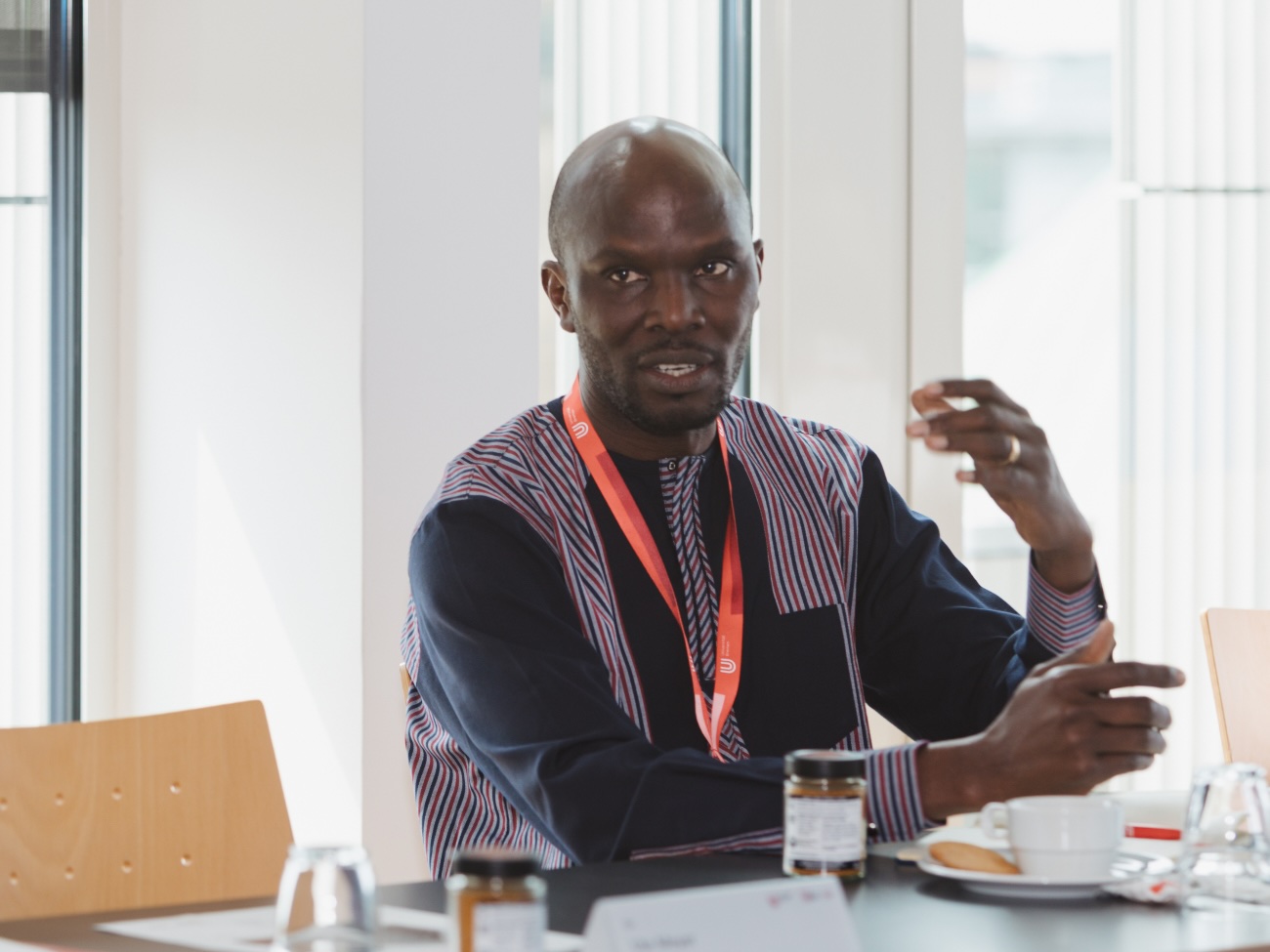
With his diverse research, Mazi Sanda appeals not only to biologists but to students of all disciplines. His seminar “Of Bees and Men – An African Perspective” is part of the university’s General Studies program this summer semester. The course explores beekeeping as a global phenomenon that is also deeply rooted in culture. “The topic is a natural fit because most people have a direct connection to it and can easily visualize it,” says Mazi Sanda. “But just as honey from Cameroon tastes different from honey from Germany, the production conditions and cultural significance also differ.”
In Cameroon, honey is often harvested from wild honeybees, and hives are made of natural materials such as tree trunks or woven baskets. The ways in which honey is used also differ. “Honey is used much more frequently in everyday life,” says Mazi Sanda. It plays an important role in weddings and other celebrations, and honey and other bee products are even incorporated into amulets, where they hold spiritual significance.
The seminar combines theoretical content with practical experience. In the “Campus Goes Biodiverse” living lab, students learn about specific measures that can be taken to support biodiversity on campus in general. The living lab is part of the BreGoS – Bremen Goes Sustainable project, funded by the BMFTR (Federal Ministry of Research, Technology and Space), and is led by Marko Rohlfs.
Dialogue Beyond the University
Mazi Sanda’s visit is part of a broader context. The University of Ngaoundéré is a long-standing strategic partner of the University of Bremen, and ties with the city of Tibati (about 150 kilometers from Ngaoundéré) are also strong. They date back to the 32-year period of violent German colonial rule in Cameroon. This history was highlighted when the Lamido (traditional regional king) of Tibati visited the Bremen Übersee-Museum in June and participated in Mazi Sanda’s seminar at the university. This encounter underscores a key theme Mazi Sanda teaches: the interconnectedness of biology, culture, history, economics, and other disciplines.
Settling In in Bremen – How the Welcome Center Provides Support
Mazi Sanda is not alone in Bremen – his family came with him, and his children attend daycare and school here. In order to settle in, they received support from the Welcome Center of the U Bremen Research Alliance (UBRA). The Welcome Center supports researchers and their families in planning and managing their stay in Bremen and Bremerhaven. Its counselors provide assistance with non-academic and practical matters such as housing, insurance, or enrolling children in daycare and school.