
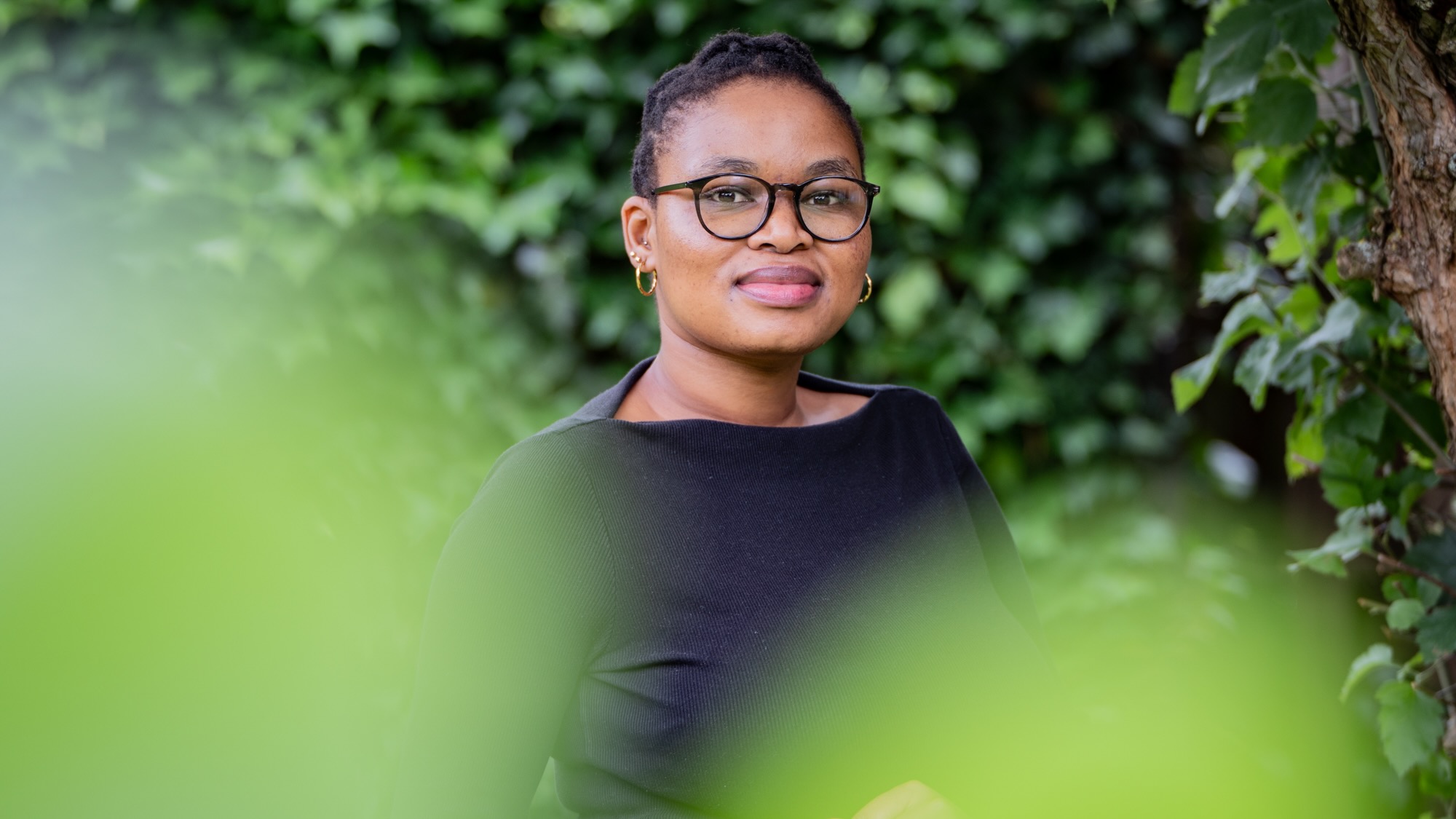
© Annemarie Popp / Universität Bremen
Birth, Faith, and Violence
A recipient of the World Youth Forum Grant, Siphosethu Fela, is researching the intersection of religion, medical science, and racism in South African obstetrics
Black women in South Africa frequently face abuse and disrespectful treatment during childbirth. Why does this happen, and what can be done about it? These are the questions at the heart of Siphosethu Fela’s doctoral dissertation. To explore these questions, she spent six months conducting research at the University of Bremen as the inaugural recipient of the World Youth Forum Grant. Established by the University of Bremen Foundation, the World Youth Forum Grant offers young South African scholars the opportunity to study and conduct research at the University of Bremen. The grant program is running for a total of ten years. The call for applications is particularly aimed at master’s students at the end of their degree and doctoral students at the beginning of their research in the field of cultural or social sciences.
From an International Youth Gathering to a Scholarship
The grant traces its origins to the former World Youth Forum in the United States – an annual gathering of young people from around the world that ran from the late 1940s to the early 1970s. When Marita Wessels, a former South African participant, passed away, she left a portion of her estate to the World Youth Forum Alumni Association, of which Dr. Rita Kellner-Stoll is a member. Dr. Kellner-Stoll also serves on the Board of Trustees of the University of Bremen Foundation and is the founder of the Kellner & Stoll Foundation for Climate and the Environment, which operates within the University of Bremen Foundation.
“The idea for the grant grew out of Marita Wessels’s South African heritage and her deep interest in cultural issues,” says Rita Kellner-Stoll. The scholarship covers airfare, health insurance, and a living stipend for up to six months – and, perhaps most importantly, it creates meaningful opportunities for international exchange, as in the case of Siphosethu Fela.
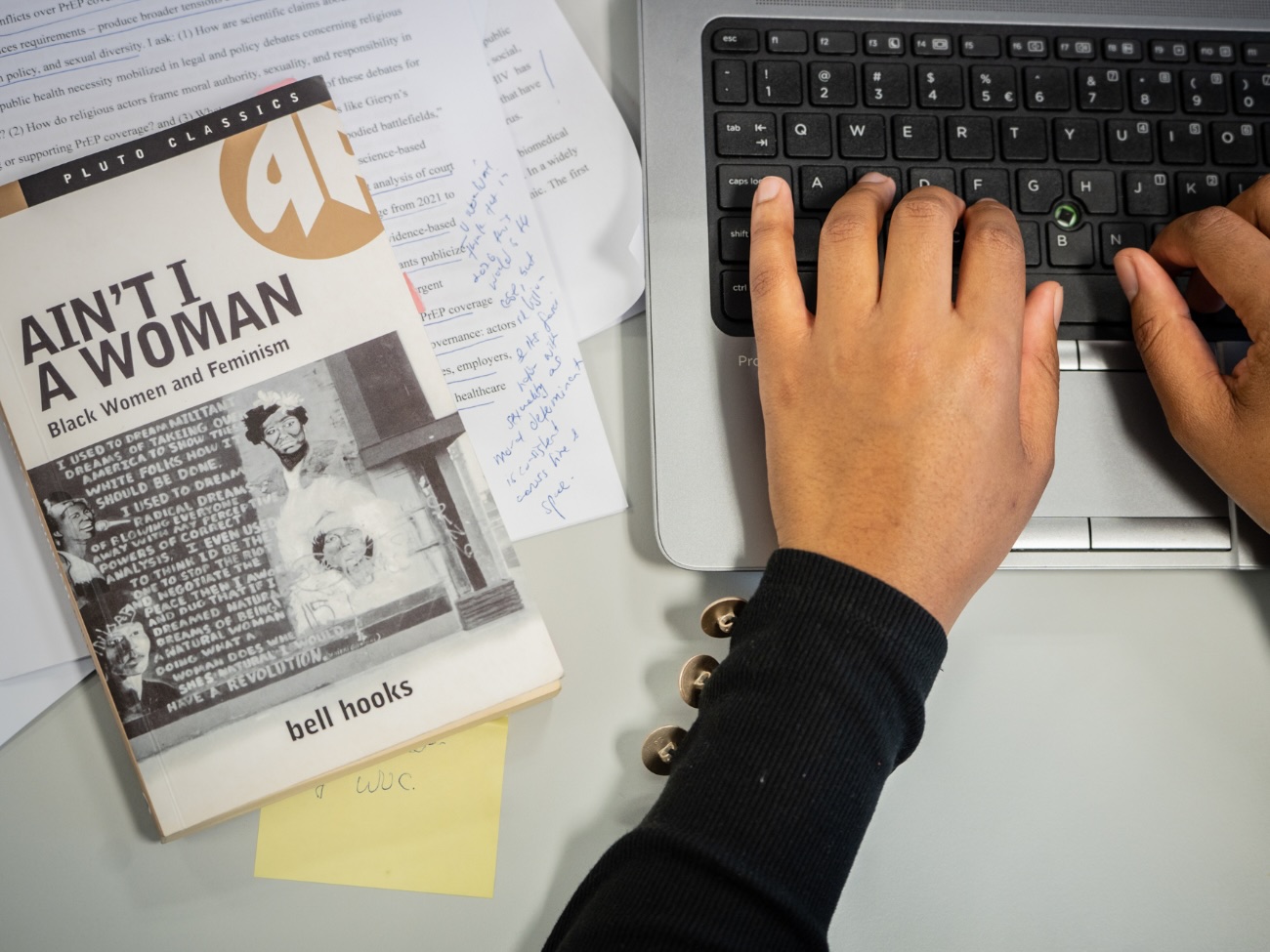
© Annemarie Popp
Birth Under Unequal Conditions
After earning her bachelor’s degree in philosophy and her master’s degree in theology with a focus on gender, religion, and health, Fela is now completing her doctorate in religion and social transformation at the University of KwaZulu-Natal. Her research focuses on the widespread and often violent mistreatment of maternal Black women at South African public hospitals. “In South Africa, healthcare is demarcated between public and private hospitals,” she explains. “Public hospitals are under-resourced, and the majority of their patients are Black.”
For many women, violence during childbirth is not the exception – it is the norm. Women report being yelled at, subjected to sexual harassment, and undergoing procedures such as cesarean sections without their consent. Based on her research, Siphosethu Fela is convinced that staff shortages and overwork do not fully explain the problem. Deeply rooted religious, racist, and colonial attitudes underpinning medical science are also a driving force.
Research with Social Impact
In her historical research, Fela uncovers the profound extent to which Christian churches in South Africa shaped perceptions of women, and of Black women in particular. Over the centuries, racist, colonial, and sexist statements were given religious legitimacy. “Black women were portrayed as inferior, unruly and sources of contamination,” she says. These attitudes have not faded away; in some cases, they have even been internalized by those most harmed by racism.
In her empirical research, Siphosethu Fela examines the relationship between faith, medical science, and racism as it exists today. She plans to survey doctors, midwives, and nurses at two public hospitals, asking about their religious beliefs and their views on issues such as abortion and women’s healthcare. Her goal is to trace how historical attitudes continue to shape clinical practice. Ultimately, she hopes her research will drive real change. “It’s important to me that research has a social impact,” she explains.
“It’s not just the grant recipients who benefit”
Siphosethu Fela has made the most of her time in Bremen. She has been combing through the city’s archives and museums in search of sources for her historical research, and she regularly exchanges ideas with cultural studies scholar Dr. Cordula Weißköppel. She has also spoken with Hajo Zeeb, a professor of epidemiology, about the parallels and differences between the German and South African healthcare systems. Networking with fellow doctoral candidates through the Worlds of Contradiction collaborative research platform has also been a priority.
The grant has not only broadened Fela’s own horizon – it has also deepened the ties between the University of Bremen and its South African partner universities. Dr. Ursel Hauschildt who coordinates the program through the university’s International Office, acts as a liaison between researchers from South Africa and Bremen. “Rozena Maart, of the School of Social Sciences in the College of Humanities at the University of KwaZulu-Natal and a research ambassador at the University of Bremen, played a particularly important role in the program’s early stages,” says Hauschildt. “Among other contributions, she helped tailor the call for proposals to the academic structures and needs of South African researchers, including questions about how the funding conditions should be designed.”
“All of this shows that it is not only the grant recipients who benefit,” states Rita Kellner-Stoll. “The grant strengthens the overall relationship between the University of Bremen and its South African partner universities. And it demonstrates how the foundation, researchers, and administrative staff can work together to make these connections possible.”