
© Patrick Pollmeier
Deceptive Design
Researchers at the Leibniz ScienceCampus Digital Public Health investigate risks of digital media such as “dark patterns”
Digital technologies influence our health in many ways. While some are helpful, others are not. At the Leibniz ScienceCampus Digital Public Health, researchers from member institutions of the U Bremen Research Alliance (UBRA) explore the opportunities and risks of digital media, including the dangers posed by “dark patterns,” which are designed to nudge social media users into taking specific actions.
It is important to Dr. Thomas Eßmeyer to emphasize that he is not fundamentally opposed to social media. Quite the opposite – he is a proponent of good digital services. Some, he believes, have an enormous positive impact. They connect people, strengthen communities, and help in many areas of life. “The problem is, there are too few good platforms!”
In his dissertation, the researcher described and analyzed in detail how Facebook, TikTok, Instagram, and Twitter – now X – deliberately steer user behavior in ways that benefit the platforms at the expense of users. Few people have studied dark patterns as intensively as the Bremen-based researcher. These are deceptive design choices, such as strategic use of colors, structures, and interface layouts in apps, websites, or other interfaces. His work has earned him international recognition, so much so that even The Washington Post, one of the United States’ most renowned newspapers, reported on his research.
“Buy Now” buttons encourage impulse buying, countdown timers create an artificial urgency, and cancellation options are deliberately hidden – these are just a few examples of the manipulative strategies used by providers. Another example is cookie banners with strategic color highlighting. “People respond to visual stimuli. A light-blue button, for instance, appears friendlier and prompts faster clicks,” Eßmeyer explains. A gray link with countless sub-options and endless clicking does not have the same effect. Who would actually want to do that?
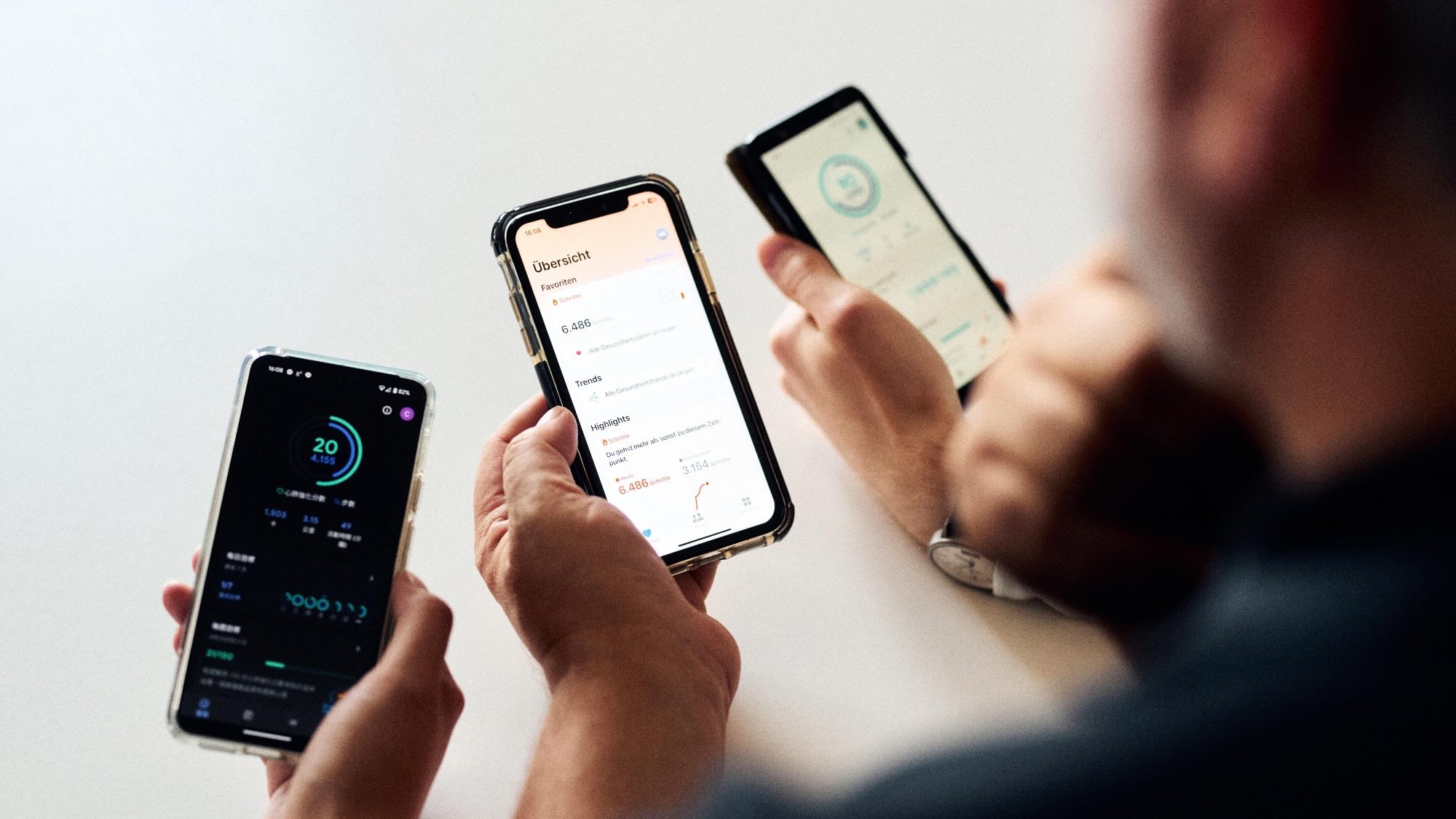
While cookies do make navigation easier, “they are also used systematically to build detailed user profiles – usually without explicit consent,” Eßmeyer says. In turn, users receive tailored advertising and purchase recommendations. Health apps use these patterns as well, often collecting sensitive data. Understanding how such manipulation works, and counteracting it, is especially important when health data are involved, Eßmeyer argues.

© Jens Lehmkuehler
These tricks can lead to rash, costly, and often irreversible decisions, and they cause users to spend more time on social media, which is particularly problematic for children and teenagers.
So, what can be done? “Opting out needs to be just as easy as opting in. And above all, we need more transparency,” Eßmeyer insists. He also offers practical tips : take your time, never click immediately, avoid subscription traps, and keep in mind that design is never neutral.
The 32-year-old first studied digital media at the University of the Arts Bremen (Hochschule für Künste Bremen), then computer science at University College Dublin. He earned his doctorate at the University of Bremen’s Digital Media Lab and at the Leibniz ScienceCampus Digital Public Health (LSC DiPH), an interdisciplinary institution specializing in research on digital public health. Against the backdrop of health care increasingly shifting into the digital sphere and platforms producing ever-increasing volumes of data, the ScienceCampus was established in 2019, funded by the Leibniz Association, Bremen State, and the Leibniz Institute for Prevention Research and Epidemiology (BIPS). Key questions driving its creation were how to ensure data security, how to responsibly use the vast quantities of information available, and how to bridge the digital divide between different population groups.

© Jens Lehmkuehler
Professor Benjamin Schüz describes the ScienceCampus as “a great stroke of luck.” The reason, he says, is that it brings together researchers from the fields of computer science, psychology, philosophy, health sciences, and law – people who previously may have only heard of one another, but now work side by side to develop solutions on a key issue of the future. “Interdisciplinary work is enormously important. It opens up entirely new possibilities,” says the health psychologist, who is one of the co-speakers of the LSC DiPH. The ScienceCampus involves three U Bremen Research Alliance member institutions: the University of Bremen, the Leibniz Institute for Prevention Research and Epidemiology (BIPS), and the Fraunhofer Institute for Digital Medicine (MEVIS). Additional institutions are involved as well.
“Interdisciplinary work is enormously important. It opens up entirely new possibilities.” Prof. Dr. Benjamin Schüz
Schüz, a professor of Public Health specializing in health promotion and prevention at the University of Bremen, has also benefited from the cross-disciplinary collaboration. Together with computer scientist Professor Johannes Schöning, who has since moved to the University of St. Gallen, Schüz developed a method to reduce misinformation on social media. Schüz and the Digital Media Lab have recently submitted another research proposal on the automatic detection of misinformation. “Without the ScienceCampus, we would never have been able to pull this off,” Schüz emphasizes.
The ScienceCampus is now in its second funding phase, with financing secured through at least 2027. Schüz considers one major achievement of the first phase to be the development of a practical framework with concrete criteria for developing and evaluating digital health applications designed to reach broad user groups, provide real added value, and, of course, avoid dark patterns.
The current funding phase focuses more on concrete applications, including prevention. What, for example, should an app to quit smoking look like to be usable by everyone? How can physicians be encouraged to prescribe it? Promoting digital health literacy, especially among older adults and non-native speakers, is a priority for Schüz, as is using of artificial intelligence to analyze large volumes of medical data. A podcast provides information on a broad range of health topics, from how children and teenagers can learn to handle online health information responsibly, to digital organ donor registries and the future of pharmaceutical supply. Two international summer schools have already brought early career researchers from around the world to Bremen. A book has been published to present the research to date (see the box at the end of the article). It is available online free of charge.

© Jens Lehmkuehler
Additionally, there is the Early Career Research Academy (ECRA), which Eßmeyer simply calls “fantastic.” Like the LSC DiPH, the academy brings together ambitious doctoral researchers and postdocs from a wide range of disciplines, and equips them with a budget they can manage themselves. “We regularly exchanged ideas in workshops and other events, went on field trips together, and attended conferences. That definitely helped my research,” Eßmeyer says.
“The Early Career Research Academy is fantastic.” Dr. Thomas Eßmeyer
Eßmeyer is a digital native. He has been fascinated by the internet since childhood; he even built his first computer himself. Human-machine interaction is his focus. Eßmeyer, who teaches at the University of Bremen and the Technical University of Berlin, wants to help people recognize and avoid potentially harmful digital environments. What makes a good platform? “It’s neutral,” says the researcher, who, while active on many platforms professionally, uses only Bluesky and LinkedIn in his personal life – and even then, only rarely. He now passes on his knowledge in the very place where he once learned so much himself: as a mentor in the LSC DiPH’s Early Career Research Academy.
Risks and Side Effects of Digital Health Technologies
Apps, smartwatches, and social media – digital technologies have a profound impact on our health. Their potential and risks are explored in Digital Public Health – Interdisciplinary Perspectives, a book authored by researchers at the Leibniz ScienceCampus Digital Public Health. Featuring around thirty contributions, experts from a wide range of disciplines discuss issues such as digital health literacy, ethical dilemmas, and practical implementation. The handbook serves as a guide for professionals in public administration, politics, health care, and academia. It has been published as an open access publication and is available online for free. Open-access publication: Digital Public Health
This article comes from Impact – The U Bremen Research Alliance science magazine
The University of Bremen and 13 federal and state financed non-university research institutes cooperate within the U Bremen Research Alliance. The joint work spans across four high-profile areas literally from “deep sea to outer space.” Biannually, the Impact science magazine (in German) provides an exciting insight into the effects of cooperative research in Bremen.