

© Adobe Stock / Reise- und Naturfotos
Following the Wolf’s Trail
Gesa Kluth, a biologist and wolf expert, speaks with up2date. about wildlife management and her time as a student
Gesa Kluth studied biology at the University of Bremen in the 1990s. In 2003, she co-founded the LUPUS Institute for Wolf Monitoring and Research in Germany with her colleague Ilka Reinhardt. Since then, they have been studying wolf behavior in the wild and raising awareness about them.
What was your career path after graduation?
After graduating, I started my own business with my colleague Ilka Reinhardt. I have been researching the return of wolves to Germany since 2001. In the late 1990s, I moved to Brandenburg to continue my wolf research and build contacts with organizations like the former German forestry authority (Bundesforstverwaltung). At that point, it was not yet a job, but a passion project. I knew it was a risk to specialize so narrowly and that I would need to earn money another way in the meantime. I thought about how I could bridge that period while staying connected to the wolf topic. In the beginning, I worked as a freelancer, taking photographs for a graphic designer friend’s website, for example.
Ilka Reinhardt started out as a programmer. We met through mutual contacts and started planning how to document the wolves’ return. We both decided to take the risk. We set up a civil law partnership (GbR) which allowed us to take on contracts. In those early years, we grew into our roles and focused on three areas: wolf monitoring, advising – shepherds in particular – on livestock protection, and public outreach on the return of a large predator. A few NGOs supported us from the start, but it took time before we received contracts that could sustain us financially, such as from Saxony’s Ministry of the Environment.
I had originally thought wolves would establish themselves in Brandenburg, given its vast forests and retreats. But they actually appeared first at the Oberlausitz military training ground in Saxony. In the beginning, I commuted there frequently and, with permission from the German Armed Forces and the Bundesforst (Federal Forest Service), searched for wolf tracks. Since 2003, Ilka Reinhardt and I have both lived in the Oberlausitz region. In essence, for over 20 years we have served as intermediaries between wolves and people. We research the animals to understand them better while keeping the public informed.
Did you have any exposure to the topic of wolves as a student?
In the 1990s, there were no wolves in western Germany, and in eastern Germany, wolves that had migrated into the area were often hunted illegally. So the topic felt very distant to me at first. From 1994 to 1995, I spent an exchange year at the University of Maryland in the United States. There I realized that wildlife management – that is, managing conflicts between people and wild animals – is a serious profession. When I returned from the United States, I could not let go of the topic, and I decided to write my thesis on wolves.
How did studying at the University of Bremen prepare you for your current career?
I have to say that my degree program prepared me very well for my professional life. I learned how to manage my time, stay focused on a topic, and pursue my own interests. The University of Bremen also supported me a great deal with my thesis. I wanted to continue doing field research and work in nature conservation and species protection. My professors were very open-minded and did not dismiss my idea for the thesis as naive. They said, “if you can secure funding, you can do it.” I then researched opportunities across Germany and abroad, making contacts in Portugal and Estonia. In the end, I chose Estonia. With the help of a scholarship from the Alfred Toepfer Stiftung F.V.S., I spent six months in a nature reserve there, studying wolf tracks and scat. The professors and research staff at the University of Bremen encouraged my determination to see the project through. I do not know if I would have had the confidence to follow through without that support.
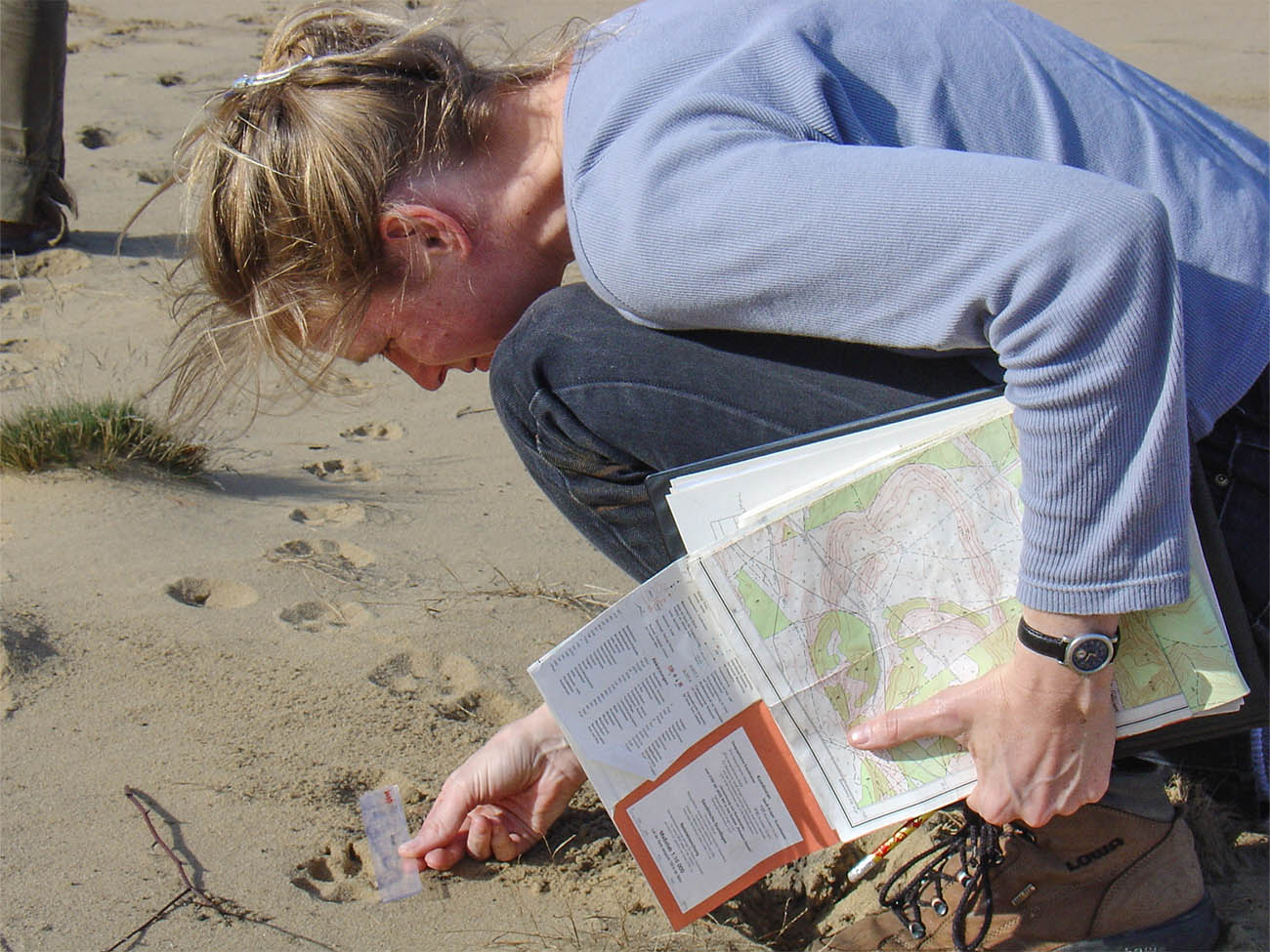
© Sebastian Koerner
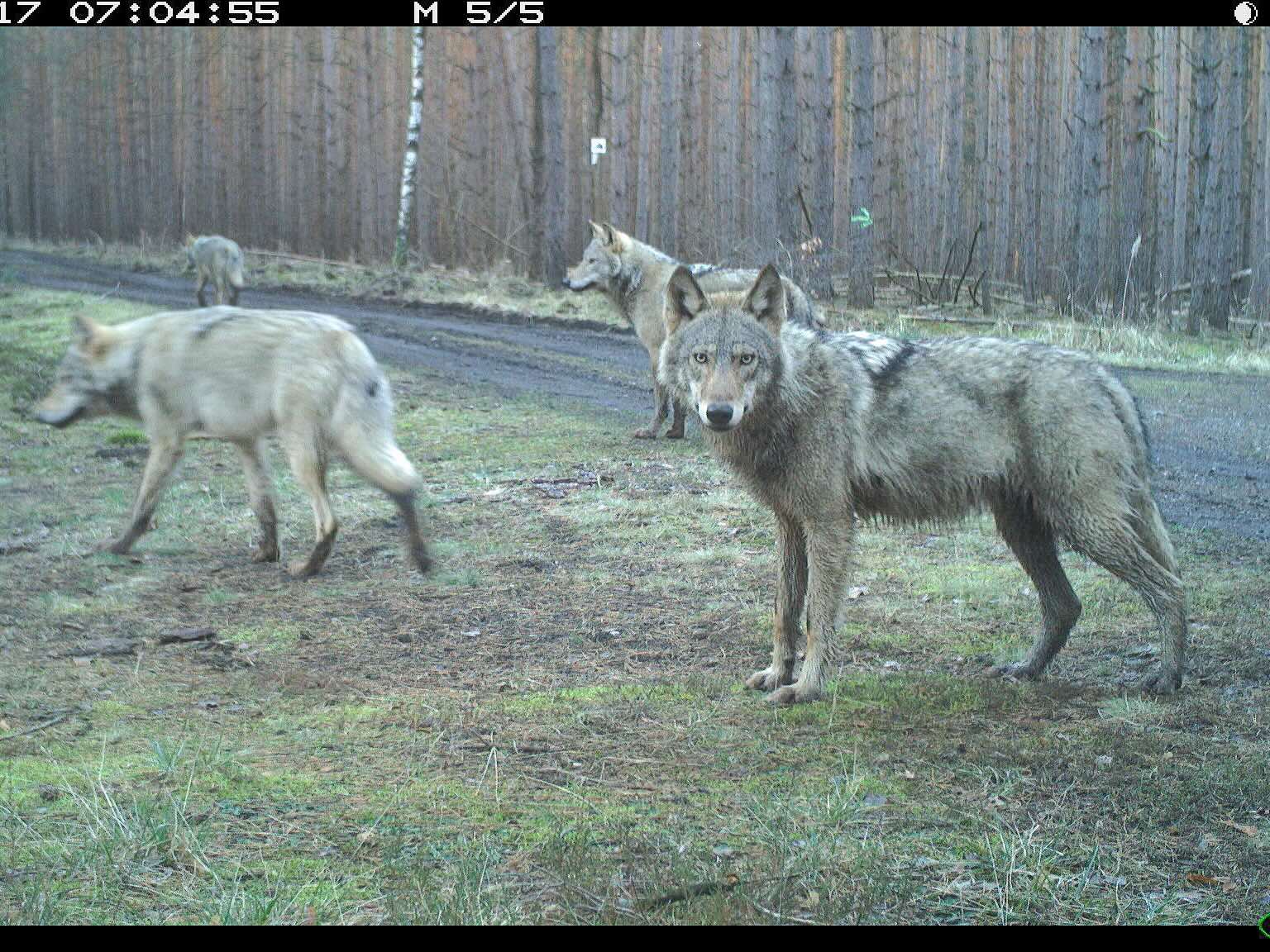
© LUPUS Institut
What inspires you about your work?
My colleague Ilka Reinhardt and I both find it fascinating to follow and help shape the development of wolf populations in Germany. It has paid off to stay committed to the subject we care most about, and we are very glad about that. We do not know where the journey will take us, but I am deeply grateful to the university for giving my work today the foundation it needed.
What advice do you have for current students?
Biology is a broad field. In my view, society needs people who work in nature conservation and have a solid background in biology. I think mediators between nature and human society, those who collect data and do public education work, are especially important. Of course, job prospects in this area require careful consideration, but I can only encourage you to get involved and explore different areas. An internship is always a great opportunity to meet new people, learn about yourself, and experience what it means to work in a team and a professional setting.
On December 1, you’ll be giving a talk at the University of Bremen on the topic “Are Wolf Populations Exploding in Germany? Results, Methods, and Objectives in Wolf Monitoring.” Can you give us a little preview?
Between 2010 and 2020, wolves spread rapidly across several German states. For the past few years, population growth has plateaued a bit. It is still increasing, but at a slower pace. The talk will cover both how we collect data across Germany and how wolf populations have been developing.
Lecture Series on Wolves at the University of Bremen
The Research Center for Animal and Animal Welfare Law (FTT) at the University of Bremen is hosting a lecture series on wolves in partnership with the Society for the Protection of Wolves (GzSdW). The series brings together scientific findings and practical experience. Talks take place every Tuesday until January 26, at 5:00 p.m., in the Banking Hall (Kassenhalle) at Forum at Domshof.
It is also possible to participate online via Zoom.
Webinar: ID: 698 1646 0710
Passcode: 928048.