
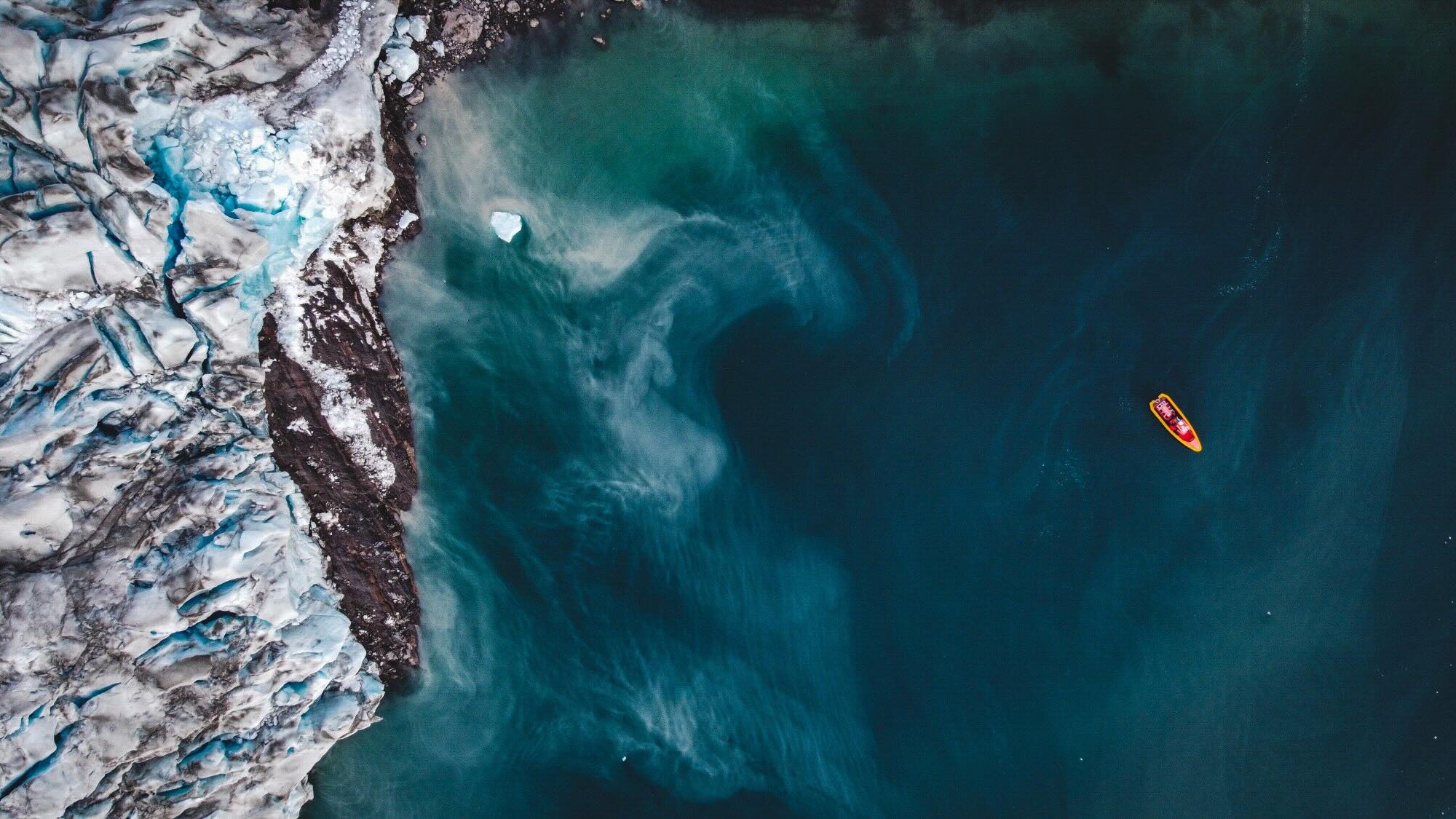
© Lasse Kyed / Ocean Image Bank
From Climate Research to Policy Solutions
Ben Marzeion’s research shapes international climate policy. As a lead author of an IPCC Special Report on the ocean and cryosphere, he provides the scientific foundation for political decisions worldwide.
Research / University & Society / Sustainability / The Ocean
When the future of our oceans, glaciers, and coastal cities is debated at UN climate conferences, Bremen is often part of the picture. Ben Marzeion’s research contributes to the scientific foundation of global climate policy decisions. Science communicator Julia Gantenberg spoke with him about how science can effectively inform political debates and the responsibility researchers have in this process.
What has been your most influential moment outside the scientific community?
According to the press office at the University of Innsbruck, it was the publication of one of my papers during my time there. It received widespread public attention after Barack Obama mentioned it on Twitter. However, my contribution to the IPCC Report has had a more lasting impact.
Has your research already led to concrete political measures?
Yes, absolutely. We provide data on changes in sea levels. This information was incorporated into the IPCC Special Report and is used by planning offices and government agencies to assess possible responses to projected developments, such as measures to protect cities from flooding.
“It gives me hope that policymakers understand the problem, are informing themselves, and are listening to scientists.” Ben Marzeion
What is your experience with communication between science and politics?
When I speak directly with politicians, I am often pleasantly surprised by how well-informed they are. What they say to the media, however, often differs – perhaps because they must consider what voters can be trusted to accept. It seems there’s a filter in place.
Are you in regular contact with policymakers?
I work more with NGOs. They help keep climate change on the international political agenda, are well-connected, and are present at key conferences. Through collective, international alliances, we can achieve greater visibility and real impact.

© Ben Marzeion
Do science and politics need to collaborate more closely?
There needs to be a clear boundary between science and politics. I have strong views on how ambitious we must be in tackling climate change. But I express my opinions carefully to preserve the credibility of science. Our role is to be constructive and to explain the consequences of making different policy decisions. My impression is that this works well. However, the fact that this doesn’t happen often enough is not due to a lack of information in politics.
What responsibilities do climate researchers have today?
In a democracy, the goal is for people to make informed decisions. Our responsibility as researchers is to provide them with the foundational knowledge they need to form their own opinions.
Where do you see the greatest potential for science to influence political processes in the future?
It’s hard to say; the international political landscape is currently in flux. It is likely that American researchers, who have long played a major role, will contribute less in the future. That will have significant consequences. On the other hand, I believe we are at a turning point where economic decisions will increasingly favor climate protection – simply because this is more cost-effective.
What gives you hope in the relationship between research and political action?
Above all, that policymakers understand the problem, are informing themselves, and are listening to scientists.
University of Bremen’s Transfer Magazine
This article first appeared in the 2025 Transfer Magazine by UniTransfer – the University of Bremen’s service point for knowledge and technology transfer. The magazine highlights individuals, projects, and collaborations that demonstrate the global social impact of Bremen’s research, extending well beyond our region.
Download the Transfer Magazine (in German) as a PDF [6.6 MB]