© Lehmkuehler
From Data to Insight
How UBRA researchers use AI software to simplify MRI use and improve diagnostics
Magnetic Resonance Imaging (MRI) is one of the most important imaging technologies in medicine. Researchers from institutions affiliated with the U Bremen Research Alliance (UBRA) have developed software that makes access to and use of MRI devices a lot easier and improves diagnostics. The AI-powered technology is a prime example of how new knowledge can be generated through data processing as is done by the Bremen Data Competence Center DataNord.
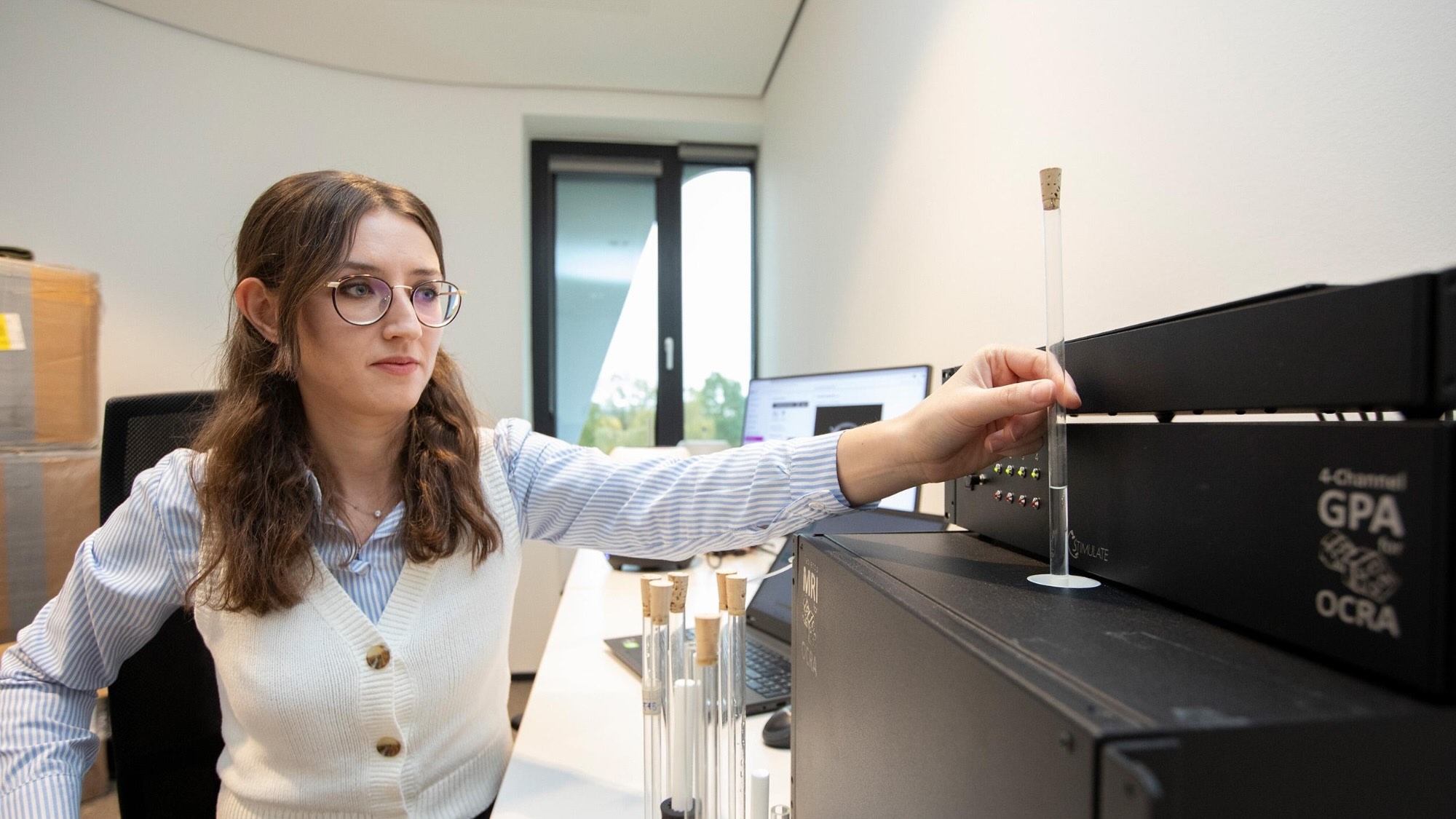
There is no room-filling device with an intimidating tube that swallows up patients, or parts of them. There are no glaring lights, no sterile atmosphere, no loud humming during the scanning process. Instead, there are two devices as small as a saucepan, a screen, and a printer-like object on a desk connected by cables. Is this supposed to be an MRI device?
This compact technical marvel, known as tabletop MRI, is housed in an unassuming room on the second floor of the Fraunhofer Institute for Digital Medicine – MEVIS. Like full-sized MRI devices, it enables 3D imaging, but not of entire body parts, bone fractures, or tumors. Instead, it captures 3D images of tissue samples and liquids that fit into test tubes.
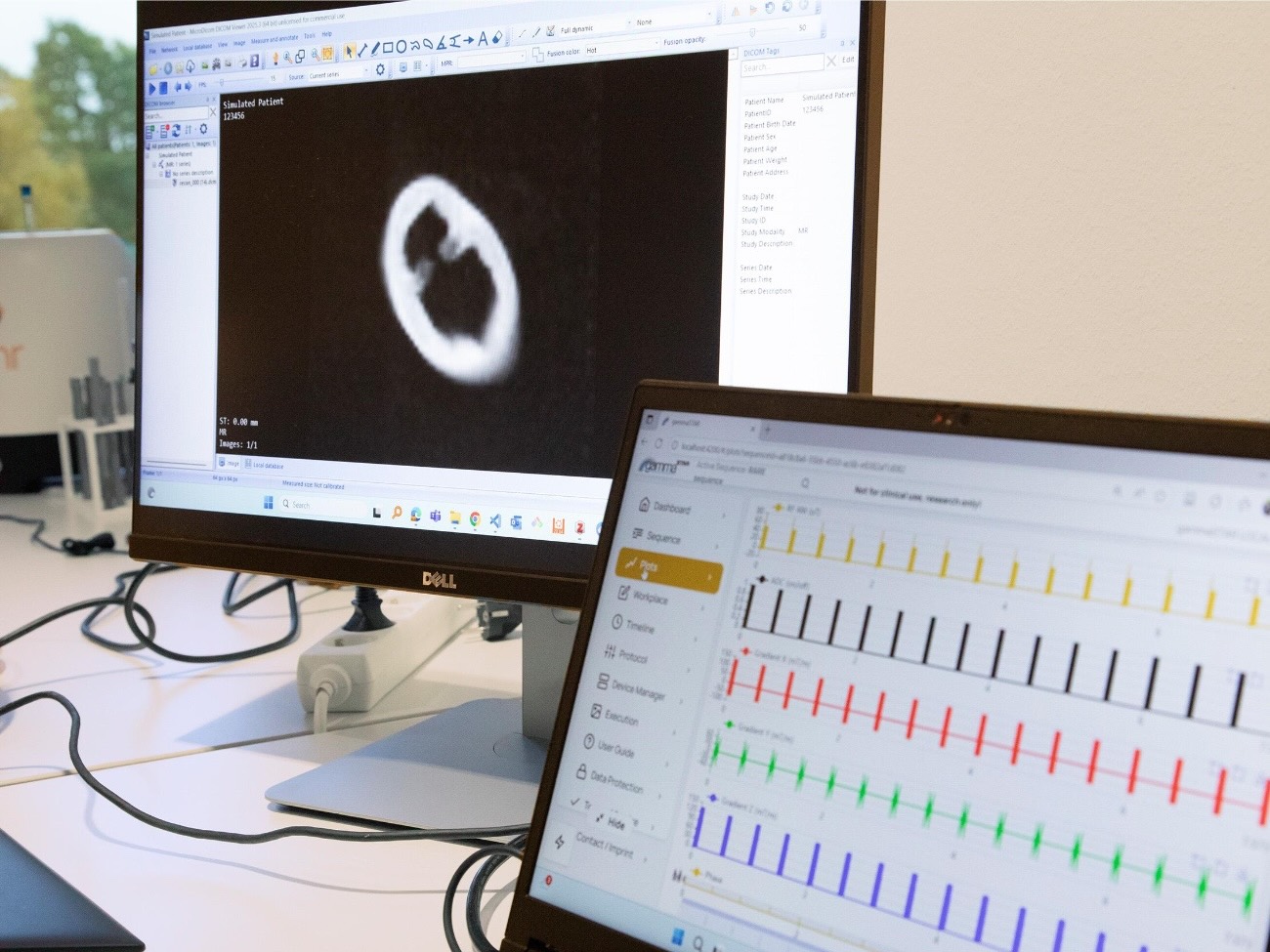
The mini MRI is powered by the gammaSTAR software platform, which was developed by researchers at Fraunhofer MEVIS. It is designed to deliver more precise, individualized cross-sectional images for diagnostics. The quality of these images depends on how the sequences are programmed for the specific body part being examined. “The correct sequence settings are crucial for the best results,” explains Christina Plump, a computer scientist at the German Research Center for Artificial Intelligence (DFKI), which developed the optimization software for the sequences. Preliminary work was carried out in the KimBi project (the German acronym for AI-based smart MRI). It involved researchers from the University of Bremen, Fraunhofer MEVIS, and DFKI as part of the state-funded “AI Centers for Health Care” initiative.
Programming sequences is complex, especially for specialized applications, and requires considerable time and expertise. gammaSTAR simplifies the process and is aided by AI. The mini MR device allows researchers to test and further develop the software. It is significantly more cost-effective and faster than a conventional MRI without compromising realistic results. “Writing sequences takes a lot of practice, and the device is extremely useful for research and teaching,” says Christina Plump. To introduce much-needed young talent to the field, the technology is even being used in workshops with schoolchildren.
© Lehmkuehler
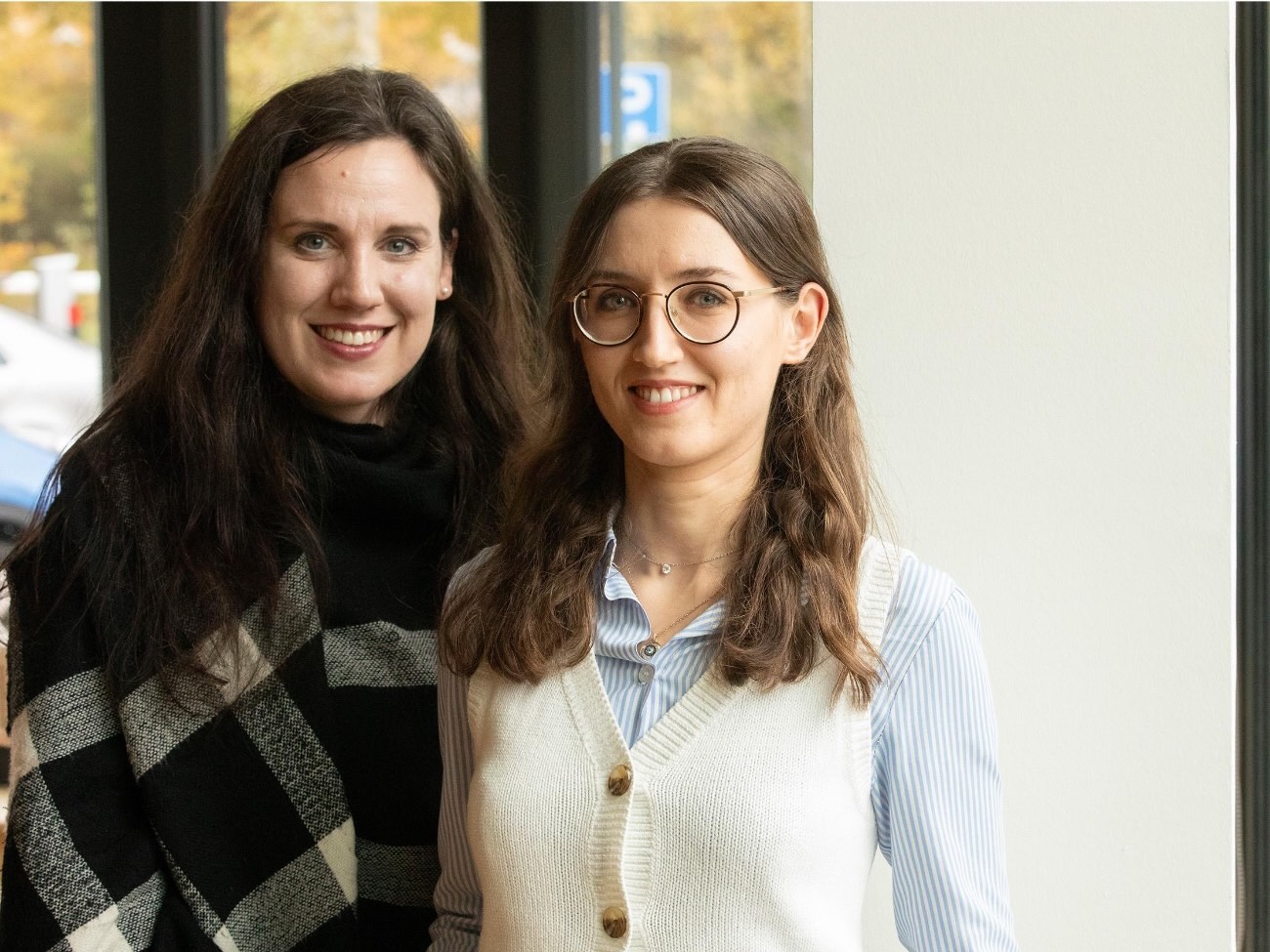
The MRI4All project is one of five projects supported by the DataNord Research Academy (see the box at the end of the text for more information). Each project involves at least two member institutions of the U Bremen Research Alliance, and funds one doctoral position. In this way, the Research Academy supports a new generation of data scientists. For early career researcher Juela Cufe, who is working on the tabletop MRI, the Academy made a decisive difference – she likely would not have found her way to Bremen without it.
Federal Government Provides 3.5 Million Euros to Launch DataNord
The Federal Ministry of Research, Technology, and Space is supporting DataNord, the only regional, interdisciplinary data competence center in northern Germany, with 3.5 million euros. “We are a hub for science data literacy that connects researchers across disciplines and institutions and creates opportunities for them at all career levels,” explains Dr. Tanja Hörner.
© Lehmkuehler
In addition to the fourteen member institutions of the U Bremen Research Alliance, the Bremen City University of Applied Sciences, BIBA – Bremen Institute for Production and Logistics, and the Institute for Information Management (ifib) are also on board, as are twelve consortia of the National Research Data Infrastructure (NFDI).
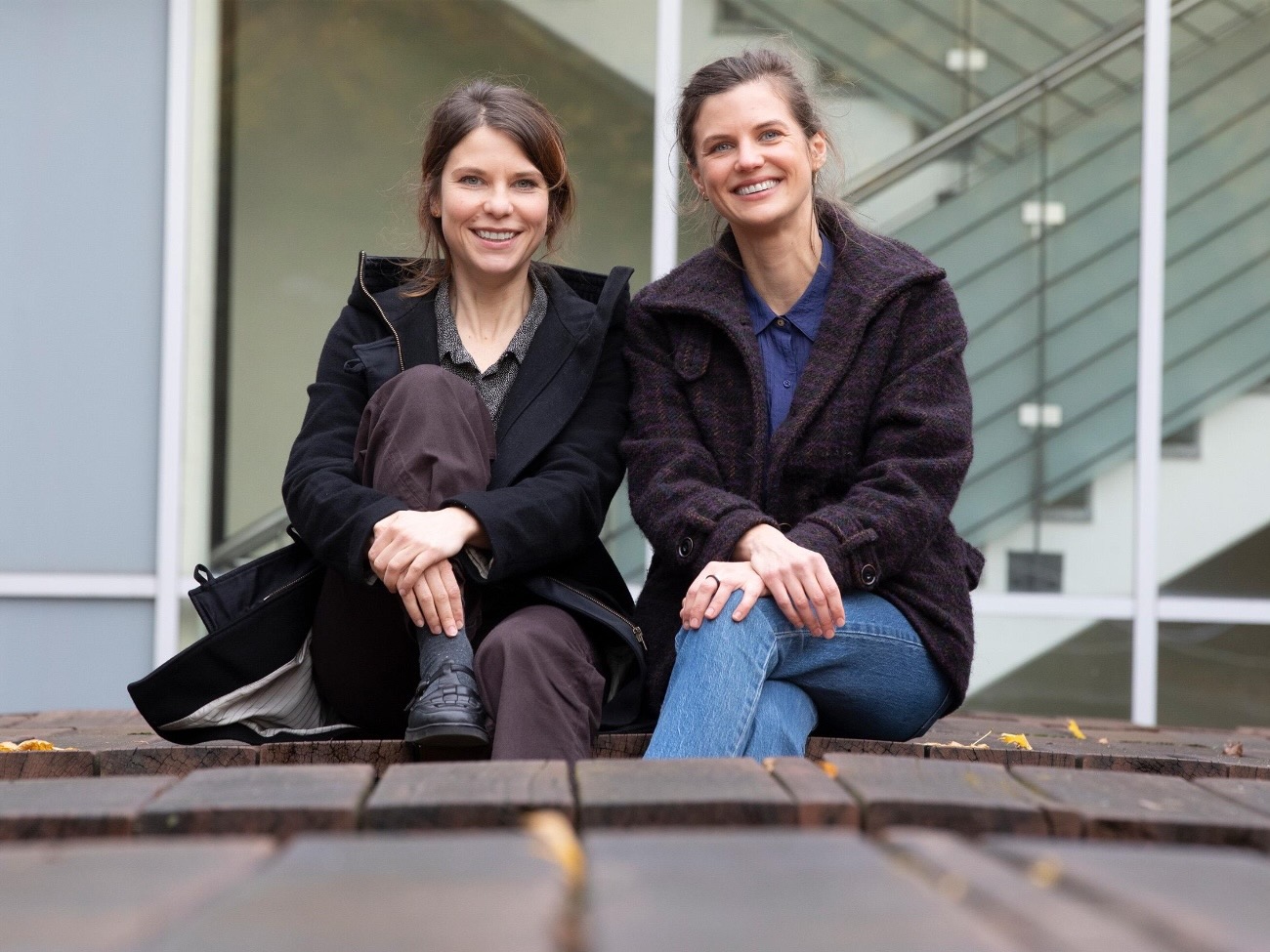
Dr. Hörner and her colleague, Dr. Lena Steinmann, are the coordinators of DataNord. Their work is intense, and involves initiating, coordinating, and bringing people together. In addition to the Research Academy, they also coordinate the activities of the Research Data Working Group, the Data Community Club, and Research Data Day. The interdisciplinary Data Train training program of the U Bremen Research Alliance is also part of DataNord and is coordinated by Dr. Lina Schaare. The program equips researchers with the necessary skills for data-intensive research right at the start of their careers.
Since 2021, Data Train has provided training in research data management and data science through lectures, workshops, and other learning and networking opportunities. On average, the program reaches more than 2,000 participants each year. Teaching staff from the member institutions of the U Bremen Research Alliance volunteer their time to participate in this– in addition to their regular teaching and research responsibilities. People beyond the university community are also involved in DataNord. One example is the Guardians of the Hedgehogs, a citizen science project run by the Leibniz Institute for Prevention Research and Epidemiology – BIPS. In the project, data on hedgehogs is being collected and evaluated.
© Lehmkuehler
„We help to improve the insights gained from data and act as a catalyst for data-driven research.“ Lena Steinmann
Another pillar of DataNord is the Data Science Center at the University of Bremen. Since its founding in 2019, the center has offered training, networking events, and consultation services to the faculties of the University of Bremen and DataNord partners. A team of five data specialists advises on data management questions, such as how to collect, store, and provide access to information, thus helping research groups work with high-quality data. The experts also support teams and individuals in evaluating statistics and using tools such as scripts in different programming languages. Consultations are tailored to individual needs, while broader topics are covered in 30-minute “Data Snack” sessions. “We help to improve the insights gained from data and act as a catalyst for data-driven research,” says Lena Steinmann, describing the center’s role.
„Data literacy consolidates Bremen as a research hub – and ensures its continued success.“ Tanja Hörner
Strengthening this kind of data literacy is at the heart of DataNord’s mission. Data are the foundation of all research. They open the door to new insights, especially when very different sources of information are linked together. These range from satellite imagery to health data. However, realizing this potential – effectively using, analyzing, and storing data in ways that make it accessible to other researchers – requires practical tools and skills that are by no means universal. And it’s not just a matter of methodology. “We place great emphasis on critical data handling, including legal, social, and ethical considerations,” explains Tanja Hörner. In an era of digitalization and the rapid spread of AI, there is a high demand for strong data literacy and experts. For researchers, this opens up new opportunities. “Data literacy enables innovative research, which in turn helps secure third-party funding for new projects,” says Hörner. “It consolidates Bremen as a research hub – and its continued success in the future.”
The small federal state of Bremen has become a data hot spot in just a few years. How did this happen? According to Lena Steinmann, it is due to Bremen’s long tradition of data initiatives, such as PANGAEA, the world-leading data infrastructure for Earth system research, founded in the 1990s, along with the expertise built around it and the close cooperation with non-university institutes within the U Bremen Research Alliance. “But to keep up the good work, we must continue to invest,” she emphasizes.
Christina Plump from DFKI agrees and adds another aspect: proximity. “The Technology Park is worth its weight in gold for research,” says the scientist. Within a very small area, experts from a wide range of disciplines work side by side, most of them in data-intensive fields. “You can just walk over and discuss a problem. Bremen has done a really good job in this regard.”
As part of MRI4All, the computer scientist Jan-Hendrik van der Veen, who commutes from Hamburg to work in Bremen, and Juela Cufe, who coordinates the project and is responsible for further developing TableTop technology, now frequently exchange ideas with colleagues from the Fraunhofer Institute for Manufacturing Technology and Advanced Materials IFAM. The Fraunhofer IFAM is another member institution of the U Bremen Research Alliance. The tabletop MRI is used not only to optimize MRI scans, but also being in battery cell research.
© Lehmkuehler
Data-Driven Research
How do environmental factors, such as air pollution and green spaces, influence people’s health? The Healthy Planet project of the DataNord Research Academy is investigating this question using satellite and health data. At the academy, early career researchers from various disciplines at institutions affiliated with the U Bremen Research Alliance collaborate on data science issues. Other projects focus on developing AI methods to ensure the quality and usability of natural and social science research data (SmartReps), creating synthetic research data (SynData), developing software to improve social media use for social justice movements (WeTheSocialMedia), and optimizing MR imaging (MRI4All). DataNord
This article comes from Impact – The U Bremen Research Alliance science magazine
The University of Bremen and 13 federal and state financed non-university research institutes cooperate within the U Bremen Research Alliance. The joint work spans across four high-profile areas literally from “the deep sea into space.” Biannually, the Impact science magazine (in German) provides an exciting insight into the effects of cooperative research in Bremen.