© Matej Meza / Universität Bremen
“Reliable Paths, True Belonging”
Dr. Mandy Boehnke on career paths at the University of Bremen – and why making them sustainable matters
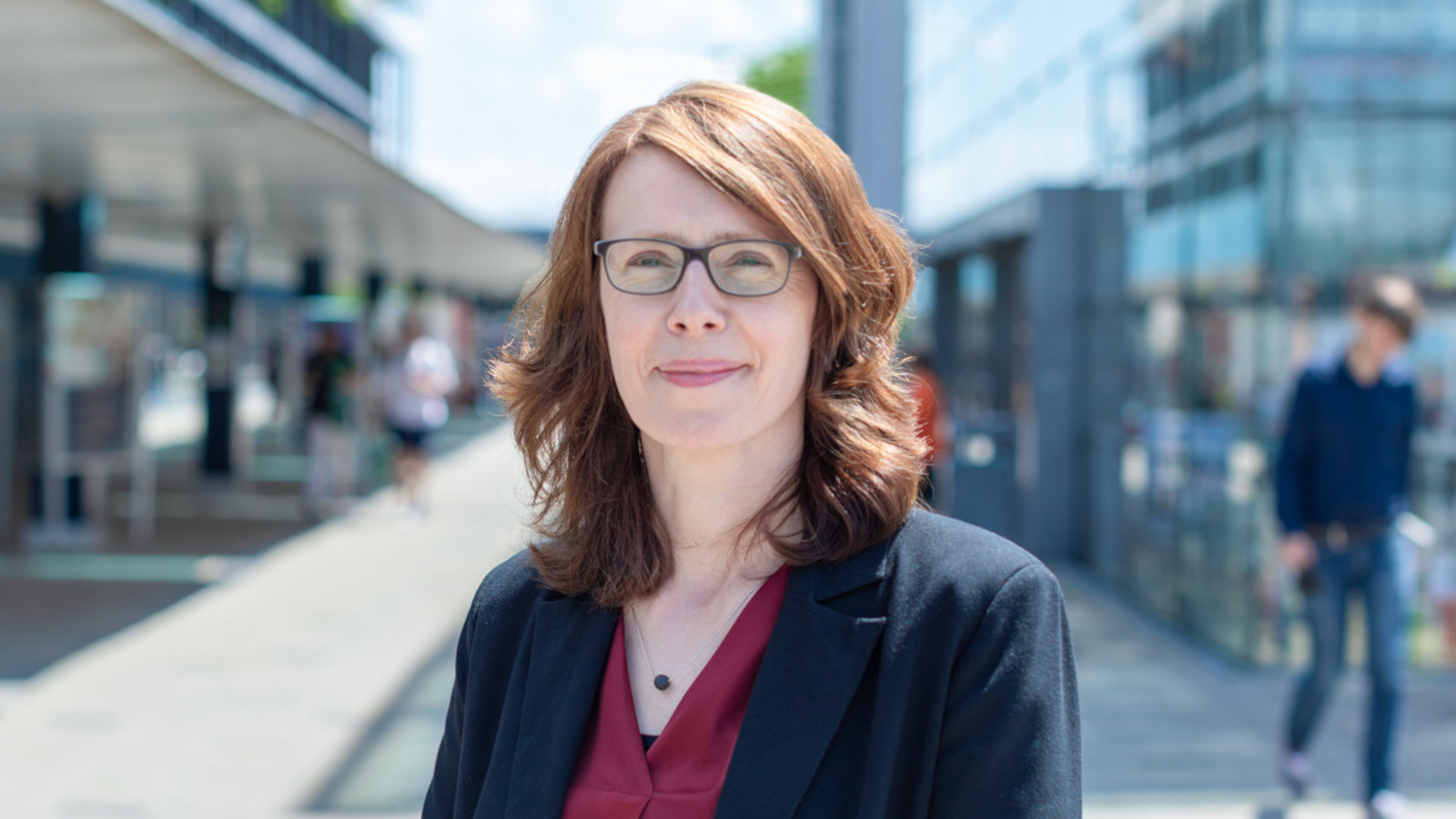
Since introducing independent tenure positions in the academic mid-level sector in 2018, the University of Bremen has become a national leader in providing reliable career paths. The new workshop report by the Tenure Track Network titled “Die Weiterentwicklung akademischer Karrierwege an Universitäten in Deutschland” (“Ongoing development of academic career paths at universities in Germany”) provides insights into Bremen’s model for academia. Dr. Mandy Boehnke, Vice President for International Affairs, Academic Qualification, and Diversity, explains in an interview what is important here, and the correlation between supporting career advancement and strengthening belonging.
Dr. Boehnke, in a recent workshop report, you shared your experiences with new academic career paths at the University of Bremen. Why has this topic been so important for you from the very beginning?
Because it focuses on the people who teach, conduct research, and start their academic careers with us. Especially after completing a doctorate, many must decide what to do next. We want to offer them reliable perspectives and do so in a genuinely collegial manner. This requires creating transparent structures, fair evaluations, and opportunities for individuals to truly become part of our academic community.
What do these career paths look like in practice?
In 2018, the University of Bremen established the categories Researcher and Lecturer, as well as their advanced counterparts Senior Researcher and Senior Lecturer. These positions offer a high degree of autonomy in research and teaching. They are designed to provide long-term career perspectives, provided that the interim evaluation, which usually takes place after four years, is successful. The positions also allow researchers to make decisions about their academic future earlier than is usually possible. What matters most is that those who work in these positions are given clear prospects for career development.
Were there hurdles in establishing these?
Of course. New career paths always entail changes. This affects structures, expectations, and the understanding people have of their roles. Additionally, the legal framework had to be adapted to anchor these positions in the Bremen Higher Education Act. However, thanks to a common understanding, we were able to create a viable solution.
What is the current status?
So far, around 20 positions have been filled, some of which have already had successful evaluations. It is particularly heartening to see that more than half of these positions are filled by women. This shows that well-designed structures not only enable individual development but also strengthen equal opportunities, which fosters a stronger sense of belonging.
What would you like to share with early-career researchers who are interested in the University of Bremen?
We offer more than career paths; we provide a place where growth is possible. Academia needs people who get involved, as well as structures that promote such engagement. Those who come to us will, I hope, find an environment that supports development, participation, and takes belonging seriously. That is our understanding of responsibility. This also includes continually questioning and improving our structures, means of communication, and routines so that all university members feel secure, valued, and empowered.
Further information
The report “Die Weiterentwicklung akademischer Karrierewege an Universitäten in Deutschland – ein interviewbasierter Werkstattbericht” was published by the Tenure Track Network of the German University Association for the Qualification of Early-Career Researchers in Germany (UniWinD). This nationwide network brings universities and other stakeholders together for the establishment and ongoing development of tenure track structures in Germany – and includes publications, events, and support services.