
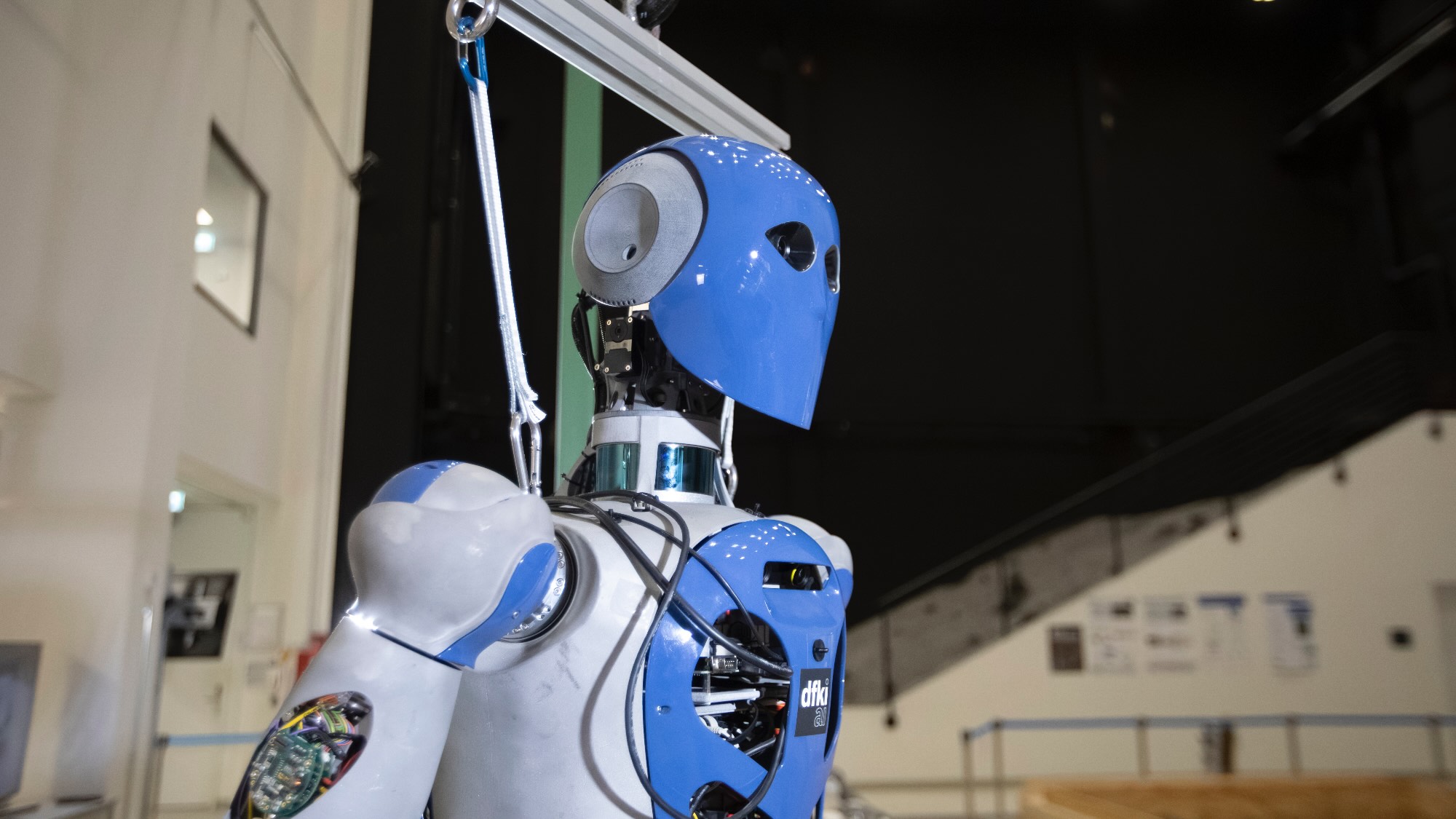
© Jens Lehmkühler
Shaping the Future of Robotics Responsibly
As AI takes physical form with robotics, two Bremen researchers explain what responsible design entails
Traditional AI generates content in the digital realm; when combined with robots, it operates in the real world. The research in Bremen focuses on designing autonomous systems that are safe, reliable, and precise. A conversation on responsible robotics with two experts from member institutions of the U Bremen Research Alliance: Dr. Sirko Straube from the German Research Center for Artificial Intelligence (DFKI) and Professor Nico Hochgeschwender from the University of Bremen.
Robotic systems that move autonomously in the physical world and interact with people: Are we currently witnessing a breakthrough in robotics thanks to the integration of AI?
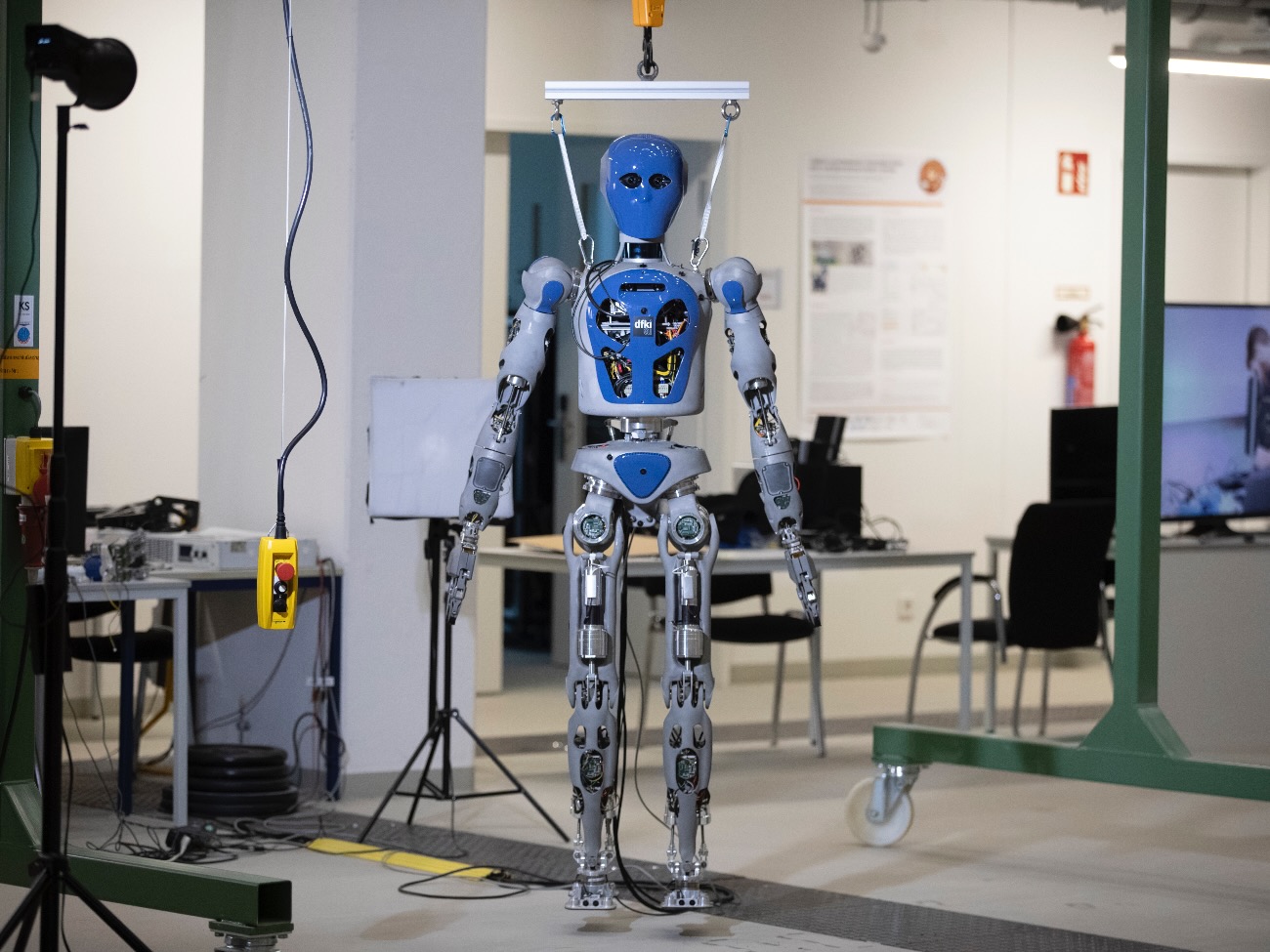
Straube: There have been efforts to combine AI and robotics for a long time. The development of generative AI has led people to believe that all you need to do is put a system like ChatGPT in a robot to get a humanoid robot that is suitable for everyday use and can do just about anything. In my opinion, that is still a bit of a gamble. AI does not yet have a real connection to the physical world; rather, it is still learning from data-driven statistical patterns. This link with robotics is something that we have to establish first.
Hochgeschwender: The idea of artificial intelligence being embodied in a robotic system was conceived by Alan Turing more than 80 years ago. What is coming together now are major advances in hardware, image recognition, and sensor technology, combined with access to large-scale datasets. In addition, there have been similar advances in algorithmic development, all unlocking new possibilities.
© Jens Lehmkühler
What applications are you considering?
Straube: AI and robotics can help in all the places where we face major challenges, whether it is demographic change, the climate crisis, or labor shortages. Such systems can fill a major gap, even in environments not designed for humans such as underwater or in space. There will also be areas where AI and robotics will replace humans, but we do not yet know what this technology will be capable of in the future. It is an ongoing learning process. Ultimately, it is always about adding value for society.
Hochgeschwender: The traditional approach – developing a technology first and then considering what impact it will have – does not work here. Technology is changing at an incredible pace; even as a researcher, this never ceases to surprise me. As a society, we are completely unprepared for it. We need to become much more agile to keep up with the development.
More than 80 years is how long the idea of merging robots and AI has been around.
How can that development be controlled so that we achieve responsible robotics?
Hochgeschwender: What can a household robot do, and what can it not do? There is still no consensus on what these systems should be allowed to decide. What applications and what individuals are they suitable for? And how can they be used to add value for people? For me, responsible robotics means first and foremost giving thought to such questions.
Straube: We are talking about technical systems that, to a certain extent, make decisions by themselves. However, we do not yet have a suitable framework in which we can establish such technology. We need something like a driver’s license, a certification process that ensures safety while also allowing for flexibility. Robots must prove themselves and get approval for performing certain tasks; that is how trust can be created. There is, however, a long way to go before that.
“What sets Bremen apart is its high concentration of research institutes. This infrastructure that we have is unique in Germany and probably in Europe as well.” Sirko Straube
© Jens Lehmkühler
How do you build trust, and how important is it for the acceptance of such systems?
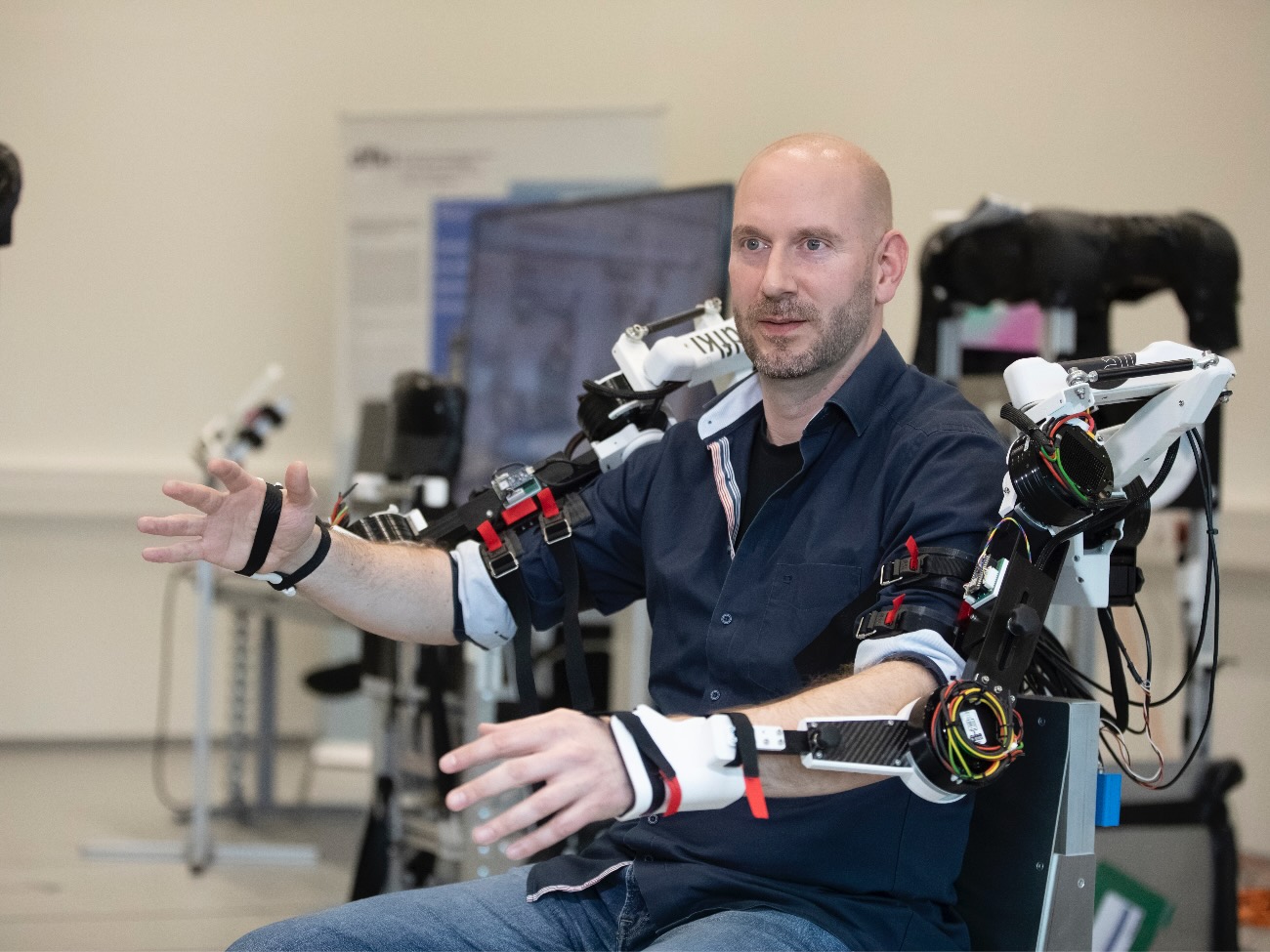
Straube: + Trust is essential if these systems are going to be used. It is something that must first be established, of course, and for that to happen robots must operate reliably. Seeing these systems in action builds trust. We must also be aware that autonomous robots will never function correctly 100 percent of the time. They cannot do that because they do not exist in a static world; they move in a changing one.
Hochgeschwender: My working group conducts simulations of robotic systems in different conditions. In my view, these tests are the only way to make reliable assertions about the functionality and functional safety of these complex systems. We need to deliver evidence of robots’ performance in the field. Trust is also created when there is a certain level of resilience, an ability to handle unforeseen situations sufficiently thanks to a system being capable of saying: “I am not doing my job right now because I do not have enough information to make a decision.”
What distinguishes responsible robotics from traditional AI development?
Straube: If I talk to a generative AI and it says something nonsensical, I can correct it in my conversation with it. If a robot is in motion and doing the wrong thing, that approach does not work. And that robot has not yet developed an ability to learn from its mistakes.
Hochgeschwender: In addition to the amazing possibilities offered by AI robotics, it is also important to mitigate risks. You have to think about why a robot makes certain decisions. Cognitive robots must first be given the ability to make their behavior explainable, and that requires new methods which we are currently studying. Processes like these are essential for reliable assessments of how secure and trustworthy a robot’s operation is.
If you were to sketch out a road map, what elements would be essential for ensuring that robotic systems operate reliably?
Straube: Let’s return to the driver’s license idea. First, we will need to determine what a system is expected to do within its area of application. Mistakes will happen, and you will have to keep making adjustments. It is similar to how cars developed: First there was the seat belt requirement, then airbags.
Hochgeschwender: Wrong decisions will be made, and there is no avoiding that. Hopefully, none of these decisions will pose a safety risk or cause harm to living beings or the environment. With regulation, we should be able to prevent that. We will not have perfect systems, although ideally we will have ones that learn from their mistakes and adapt their behavior.
Straube: Errors are an integral part of how these systems operate, and I think it is extremely important that we acknowledge this. Autonomy means navigating probabilities: Sometimes the systems do the right thing, and sometimes they do the wrong thing. If you want to successfully make a technical system autonomous, you need this range.
© Jens Lehmkühler
“Bremen is certainly not the wealthiest region, but we rank at the top in terms of input to output.” Nico Hochgeschwender
What role does Bremen play in robotics research? What makes the location special?
Straube: What sets Bremen apart is its high concentration of research institutes. We have a wealth of local knowledge, and it continues to grow. As a result, more and more robotics companies are establishing themselves here. As for the German Research Center for Artificial Intelligence, this infrastructure that we have is unique in Germany and probably in Europe as well.
Hochgeschwender: When I evaluate the success of something, I like to look at input versus output. How much money is flowing into the system, and what is coming out of it? Bremen is certainly not the wealthiest region, but we rank at the top in terms of input to output. Another great thing about Bremen is its strong culture of collaboration. The people are working toward a common goal, which is not always the case elsewhere.
IN THIS INTERVIEW:
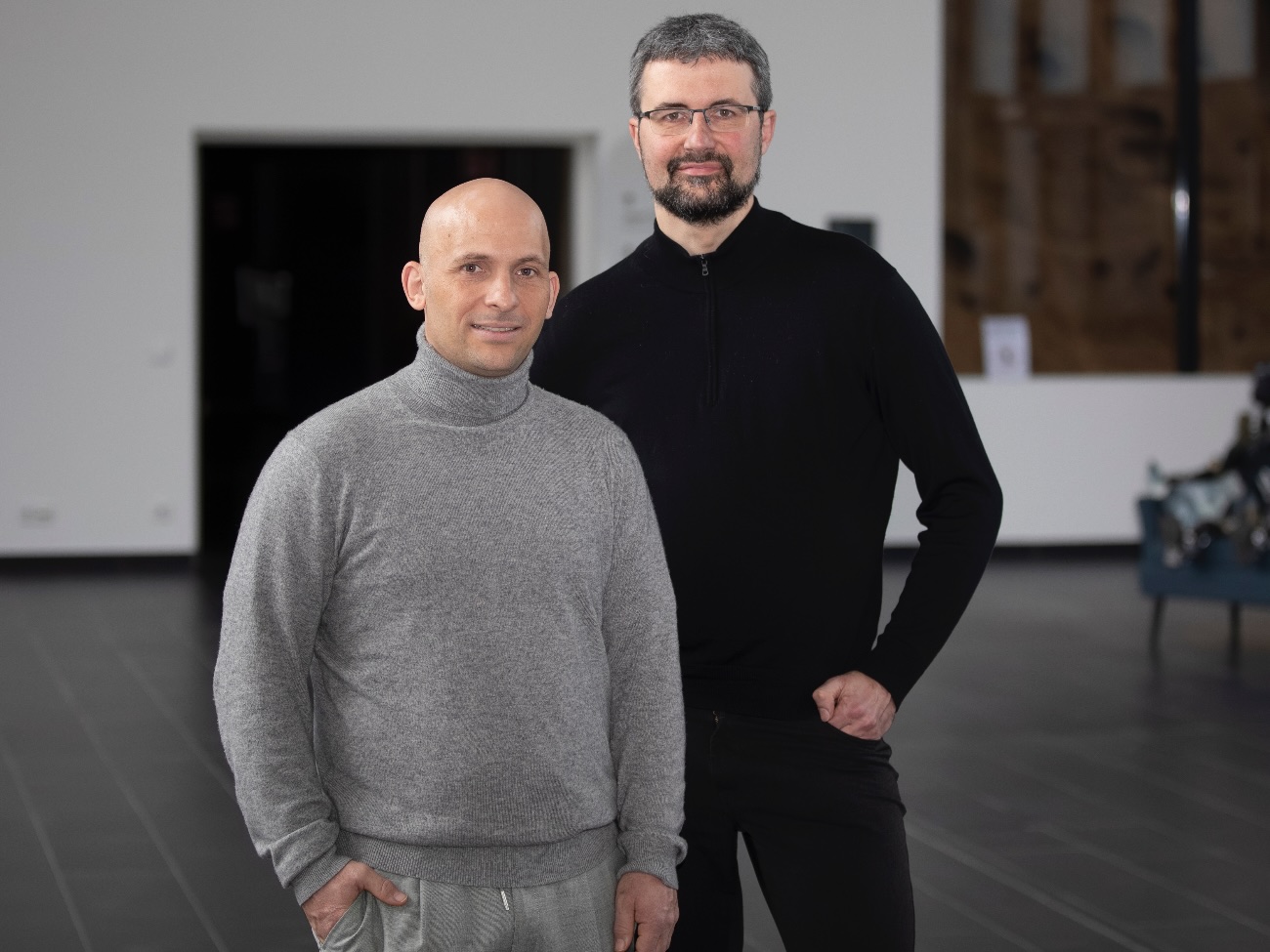
Dr. Sirko Straube is Research & Administrative Manager and Deputy Director of the Robotics Innovation Center at the German Research Center for Artificial Intelligence (DFKI). The biologist has for a long time been working on the question of what is needed to enable technical systems to navigate the real world. In addition to human–machine interaction, his work focuses on strategies for building trust and reliability, among other things.
Dr. Nico Hochgeschwender is Professor of Software Engineering for Cognitive Robotics and Systems at the University of Bremen. Among other things, his work focuses on the development and application of cognitive robots that are capable of learning, interacting with humans, and making autonomous decisions in complex environments. One goal of his research is for future robots to be able to assess themselves and their behavior.
B-Human Always Winning
The B-Human team has won the RoboCup world championship twelve times, most recently in 2025 in Brazil, and also claimed victory in the newly introduced Humanoid Soccer League: This team from the University of Bremen and the German Research Center for Artificial Intelligence (DFKI) has for years dominated the world of robot soccer. The world’s most popular team sport is being used to conduct innovative research and to inspire students to pursue academic careers with research-based learning. This success is due in no small part to the continuity of the coaching team, which for more than 20 years has been led by Dr. Thomas Röfer of the German Research Center for Artificial Intelligence and Dr. Tim Laue of the Faculty of Mathematics and Computer Science at the University of Bremen.
Summer of AI
In the summer of 2026, Bremen will become an international meeting point for artificial intelligence. From August 15 to 21, thousands of researchers and guests from around the world will gather for the combined International Joint Conference on Artificial Intelligence and European Conference on Artificial Intelligence (IJCAI-ECAI 2026). Under the slogan “Summer of AI,” multiple events will be held free of charge for the general public throughout the city. From August 17 to 21, the AI x Open Lab at Forum at Domshof will offer hands-on experience with cutting-edge AI technologies. At the same venue, AI Lounges will bring together experts and the public in an open, informal setting to discuss the latest developments, opportunities, and challenges in AI. For the full program, visit the official Summer of AI website.
This article comes from Impact – The U Bremen Research Alliance science magazine
The University of Bremen and 13 federal and state financed non-university research institutes cooperate within the U Bremen Research Alliance. The joint work spans across four high-profile areas literally from “deep sea to outer space.” Biannually, the Impact science magazine (in German) provides an exciting insight into the effects of cooperative research in Bremen.