
@ Leona Hofmann / Universität Bremen
What Brought You to… the Academic Senate?
Learn how students can bring their concerns to the university’s highest committee
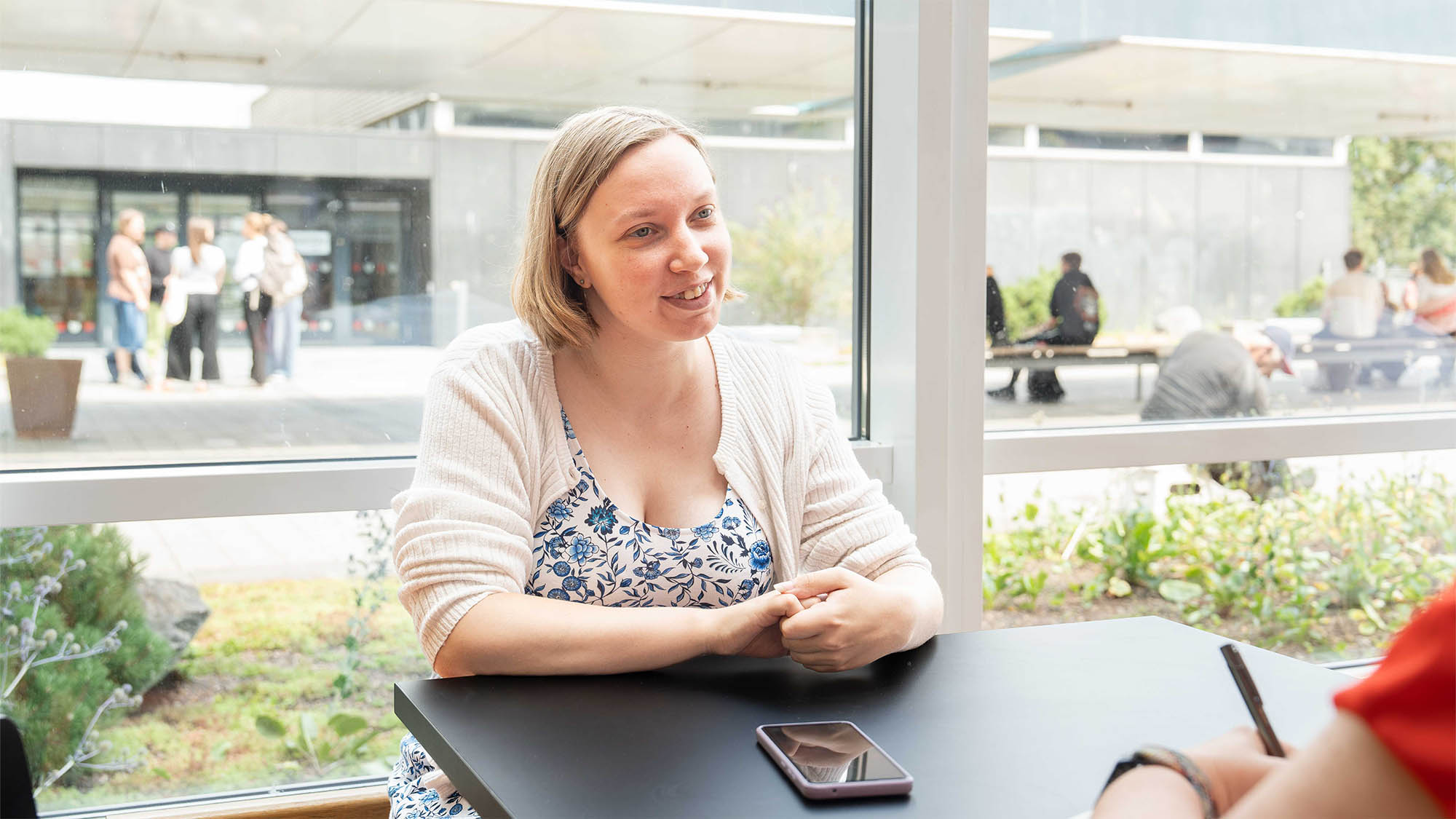
Saskia Gagel serves as a student representative on the university’s highest committee, the Academic Senate (AS). In this interview, the 27-year-old explains her motivation for doing so.
Saskia, you’re studying to become a biology and German teacher, and have just started the third semester of your master’s program. Your days are probably already quite full, yet you volunteer as a student representative (in the StugA committee) in multiple degree programs and are also active in the Academic Senate (AS). Isn’t that all a bit much?
I certainly do have more than enough to do. Sometimes I am busy until late in the evening. However, committee work is important to me. I find the dialogue between people with different institutional roles fascinating. The people are all very different, and each one contributes to the university in their own way. Each committee has its own unique appeal for me. As a student representative, I’m closely involved with students’ concerns, and in the AS, I can directly influence current discussions and ensure that student perspectives are considered.
How did you become part of the AS?
It was more or less by chance. Some of my friends were in the AStA and showed me how interesting political engagement can be. I ran on a joint ticket for student council and the AS and was elected right away. I’ve been an AS member ever since, and, since I was recently reelected, will have at least another year left.
The AS consists mostly of older, very experienced people. There are also clear procedures and speaking rights. Do you find this intimidating at all?
At my first AS meeting, I felt like I had been thrown into the deep end. I really had no idea what to expect. But after participating for over a year, I don’t worry about that anymore. I’m not the only student representative; there are four of us in total. Of course, we put in the preparation to make sure we show up strong at the meetings. In my experience with other AS members, they are open to hearing our ideas and value our work. I enjoy the negotiation process and reaching compromises. Whether or not I feel comfortable in such committees depends a lot on my expectations going into the discussion. By now, I know the university quite well, so I approach the meetings in a pragmatic and realistic manner.
@ Leona Hofmann / Universität Bremen
What do you mean? Can you give an example of this matter-of-fact approach?
One example would be campus safety. It’s a recurring topic of discussion among students, particularly regarding the GW2 Building. A survey conducted by Faculty 12’s student representatives showed that more than half of the students don’t feel safe on campus. We found this alarming, so we submitted a draft resolution to the AS, which was unanimously approved. Now, there is an official commitment from the entire university for a safer campus. The resolution calls on the University Executive Board to address the issue and plan corrective measures. There has already been a specific improvement: funding for renovations was allocated, and the first paint jobs have begun. That is what I mean by being realistic: the University Executive Board cannot renovate the entire GW2 Building overnight. However, our concerns were heard, and they are taking steps in the right direction.
What happens now?
I’m known for being relentless with important issues, and we intend to follow through on safety measures. It’s important to have the support of all students for this effort. We make sure we are transparent and regularly report the outcomes of the AS meetings, for example, at the student representatives’ conference. My goal is to motivate other students to get involved as well. We need to make our will known, since academic self-government requires participation.
What traits are important for being a student representative?
More than anything, students need to be interested in discussing issues with others and be willing to advocate for change. Perhaps those interested could reach out to the student representatives in their programs and get involved there. That is where it all began for me, and I highly recommend it because this kind of involvement teaches you a lot. It offers a fascinating glimpse behind the scenes at the university and the discussions provide a chance to actively train my communication skills, which will benefit me throughout my life.
About the Academic Senate
The Academic Senate (AS) is the most important self-governance body of the University of Bremen. It is responsible for all fundamental decisions concerning the university’s development. The Academic Senate consists of twelve professors, four students, four mid-level faculty representatives, and two staff members from administration and operations. The university president is chairperson of the Academic Senate, but has no voting rights.
Visit the Academic Senate’s website